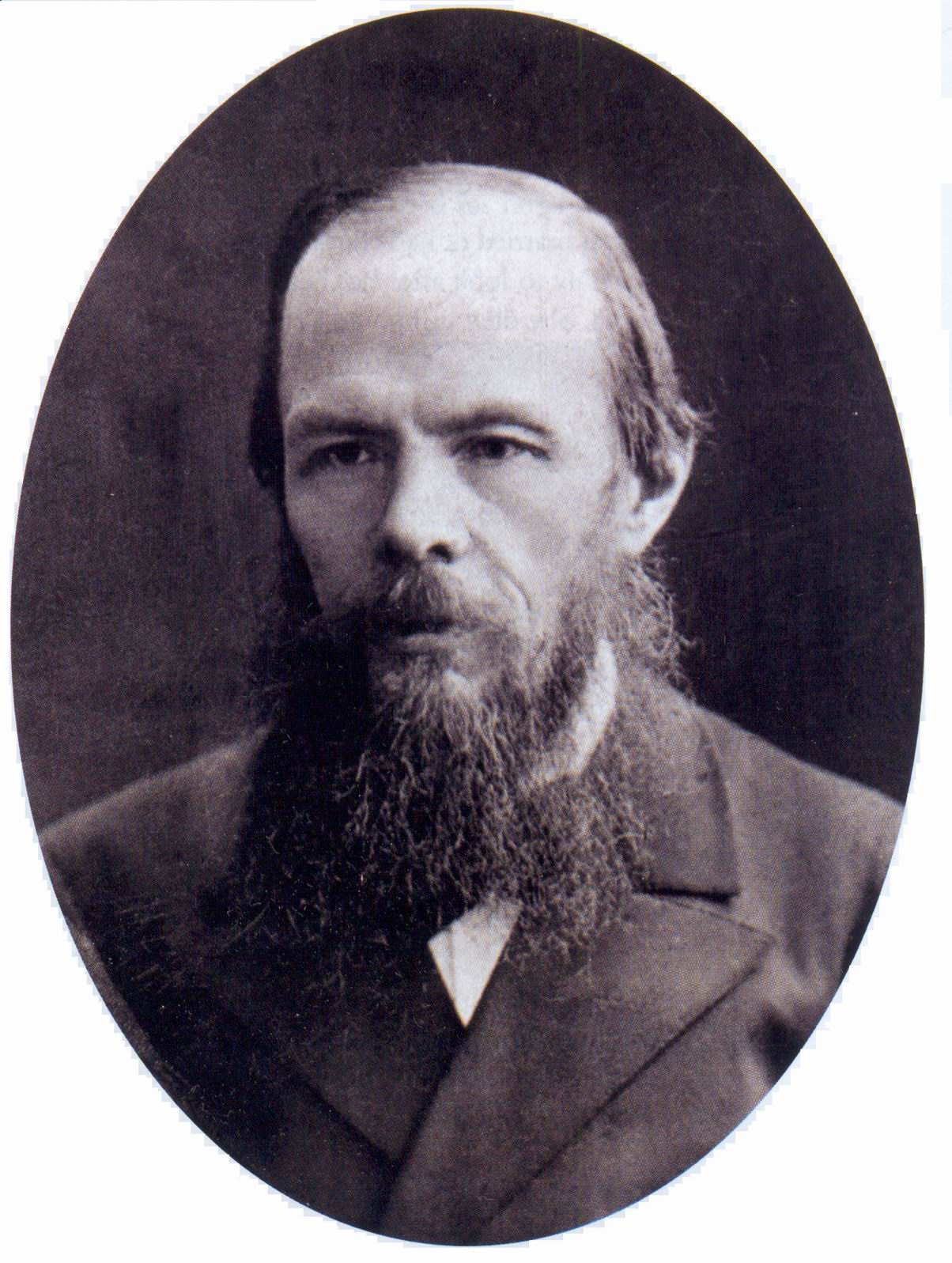
Showing posts with label Fyodor Dostoevsky. Show all posts

Saturday, April 22, 2023

Potpourri 1: Andrew D. Kaufman on Dostoevsky & Mariengof on Cynics

Now that tax season and a multitude of other annoyances are out of the way, it’s time to get to that book backlog I mentioned in my last post. I’m not quite sure how to start clearing it away, though I suspect words like “messily” and/or “inelegantly” might be appropriate, particularly since I finished these two books many months ago. I think I’ve written before, though, that I enjoy writing about books long after reading them because it’s always interesting to find out  to see what stays with me. And so…

Andrew D. Kaufman’s The Gambler Wife: A True Story of Love, Risk, and the Woman Who Saved Dostoevsky, a book where the subtitle is so descriptive that this post almost feels superfluous, was part of my evening reading last autumn. Odd though it may sound, Kaufman’s writing about Dostoevsky’s gambling probably made the strongest, most harrowing, impression on me. After The Gambler Wife, fictional accounts of gambling (most notably in Balzac’s Lost Illusions) that might otherwise have seemed over-the-top felt utterly believable. I even wrote “Awful!!” at the start of a section that begins a month after the newlywed Dostoevskys arrive in Baden-Baden: Fyodor Mikhailovich (FMD) gambles (Kaufman mentions his “destructive mania”), and Anna Grigoryevna (AGD) hikes as an escape, since she’s also faced with, in her (translated) words, “grizzling heat, squalling children all around us, the smithy’s unbrearable hammering.”

Though I certainly wouldn’t say I think Kaufman’s book is mistitled, of course it’s as much about FMD as AGD, offering a historical, literary, and psychological introduction to FMD’s life and work, and showing AGD’s very crucial role in supporting FMD’s life and work. AGD eventually even published his books. The once-upon-a-time beginning to their marriage came when FMD was seeking a stenographer. AGD’s work began, appropriately, with The Gambler, which is, by the way, one of my favorite Dostoevsky novel(la)s. FMD’s ongoing relevance and reputation are topics of discussion as well, with Kaufman mentioning sensitive subjects, including that “Dostoevsky was deeply influenced by Slavophile ideas.” In a later chapter Kaufman notes “contradictions of Dostoevsky’s art and thought,” including xenophobia as well as, to use Gary Saul Morson’s term, “’morally reprehensible’ anti-Semitic motifs” in FMD’s work.

Kaufman’s primary focus, however, is AGD’s many roles as FMD’s partner, and he provides lots of telling primary-source information. AGD, for example, told her sister that FMD always seemed to be “sucking me into himself,” adding that he required a wife willing to “devote herself entirely, entirely to him.” (I’ll now never stop thinking of FMD as an energy vampire…) Later in the book, Kaufman writes that “…there were others [writers] who considered Anna an enabler, a woman who failed to set boundaries for her husband and gave up her own identity in service of his needs.” Given what I read, the concept feels completely correct here even if the word “enabler” feels like presentism to me. (Thank you to Languagehat for telling me the word “presentism” exists!) Nits of that sort certainly didn’t detract much from my enjoyment of The Gambler Wife, which is a compact and very readable work of narrative nonfiction, ideal for someone like me, who is emphatically not a Dostoevsky specialist but wants to read a basic account of his life, books, and marriage. The words Kaufman uses for his title, by the way, were uttered by FMD after what Kaufman calls AGD’s “flirtation with roulette” in Baden-Baden.

On a completely different note, Anatoly Mariengof’s Циники (Cynics) is one the most stylistically and thematically interesting books I’ve read in the last couple years. It’s also not an easy book to write about or even describe. Set in 1918-1924 Moscow, during the Civil War and the New Economic Policy, it’s very much a book of its time, with references to hunger, cannibalism, war, sleazy NEPmen, hunger again, war again, and cocaine use. Thinking more generally, it’s also both a novel of a fractured country and culture, and a novel about romantic entanglements with geometry larger than triangles. It’s a book about very physiological things, too: I had not been expecting early enema references (in one case, connected with love) that felt both very mundane in terms of content but, well, rather unusual for literature.

Languagehat and I corresponded about Cynics, too, so I sought out his blog post, which sums up my favorite aspect of the novel beautifully:

The genius of the book is that all this is laid out not in sweeping Tolstoyan exposition or anguished Dostoevskian self-revelation but in short bursts of dialogue or event, interspersed with even briefer accounts of what’s going on in the country at large, usually snippets from newspapers about battles, decrees, or starvation.

One of my favorite examples of this – I began thinking of those snippets as “the crawl” – comes in 1922, where section 33 (the crawl) mentions the arrest of two cannibalistic women and their victims, and then section 34 (the main story) returns to our characters in a luxe setting with music, tuxedoes, blini (food!)… Mariengof’s juxtapositions are wonderfully evocative and jarring, perfect for the time.

Cynics is one of those wondrous books (most of which, come to think of it, seem to be “about everything”) that I seem to soak up rather simply reading, making my reading more emotional than analytical. I’ll end on that note, with a link to Languagheat’s post about Cynics, which includes a plot summary far better than I could have come up with.

Disclaimers & Disclosures: The usual. I received a copy of The Gambler Wife from Riverhead Books, thank you very much!

Up Next: More backlog.

Sunday, February 19, 2017

Here I Am to Brighten Your Day! Darkest Russian Literature

I felt a little jolt last week when I read this tweet from The New York Times Book Review:


I knew—just knew—that “darkest novel” in George Saunders’s reading life had to be Russian. And I was right: the book is Russian. But I was wrong about the title: the book he mentions is Lev Tolstoy’s Resurrection, about which he says, “Tolstoy’s “Resurrection” might be the darkest novel I’ve ever read — basically, a slow descent down from privilege and power into the terror and cruelty that comes of poverty and ritual oppression. (I know, it sounds bleak but. . . .)”

I’d say that sums up Resurrection pretty well; I, too, remember it as dark for those same reasons. I read Resurrection in my years before the blog and recommended it in a “forgotten classics” workshop, noting some stylistic differences and common themes with both War and Peace and Anna Karenina, though now, years later, I’d be hard-pressed to say exactly what those were…

Saunders hits [sic? is this how it works?] a trifecta for Russian literature in this week’s “By the Book” for the Book Review: he also mentions the narrator of Isaac Babel’s story “In the Basement” as a favorite character and notes that he’s planning to read Svetlana Alexievich’s Zinky Boys; the book’s 1992 translation, by Julia and Robin Whitby, was recently reissued by Norton.

On a related note, Babel receives more attention in this interview for Forward, in which Aviya Kushner asks Peter Orner about, as she puts it in her introduction, “how to read in the age of Donald Trump, why Isaac Babel matters so much, and other questions about the connection between literature and survival.” This is about my hundredth reminder that I need to (re)read more Babel, something I’ve been remiss about for, well, decades. Orner, by the way, specifically cites Walter Morrison’s translations of Babel.

But back to the darkest Russian novels ever written… Which novel did I think would be Saunders’s darkest? My second choice was good old F.M. Dostoevsky’s Crime and Punishment, which gave me unthinkable nightmares after I read the murder scene at bedtime not so long ago. (Do not read that scene just before bed. Please.) Claustrophobia alone would be enough to qualify C&P as dark but that murder scene is brutal. My first guess, though, was Mikhail Saltykov-Shchedrin’s The Golovyov Family (here’s the New York Review Books page on Natalie Duddington’s translation, complete with blurbs), which I also recommended in that forgotten classics workshop. I didn’t mention claustrophobia in this summary for handouts, but I felt it, intensely, in this book, too. Here’s what I wrote:
Ouch! This is the ultimate book about dysfunctional families. I have to admit that I found it difficult to read at times, both because of obsolete language and the absolute horridness of the characters. But I’m glad that I stuck with this book that Dmitrii Mirskii, an historian of Russian literature, called “the gloomiest in all Russian literature,” particularly because S-Shch has such a knack for showing the way things really were. The rottenness of the gentry is stunning, and I found the ending almost unbearably depressing. Still, I recommend it.
Those books are pretty dark but I think my very darkest book ever would have to be Roman Senchin’s The Yeltyshevs (previous post), which is chernukha—a Russian word for what I’ll just call pitch-black realism—to end all chernukha. It’s unbearably sad and I used “ouch” in that blog post, too. But I loved that book because it’s so suspenseful and so well-composed as it describes a failing family; I’m not surprised at how much praise I’ve heard for The Yeltyshevs from other Russian writers.

Another big contemporary favorite that’s very dark: Mikhail Gigolashvili’s The Devil’s Wheel (Чертово колесо in Russian), which examines heroin addiction and corrupt cops in Tbilisi. Gigolashvili includes lots of dark (of course) humor, plus action, making nearly 800 pages fly by as if they were 80. This book has stuck with me very well since I wrote about it in 2010.

I could add lots more gloomy books to the list but will stop there. Other dark suggestions will, of course, brighten the coming days!

Disclaimers: The usual. I’ve translated a bit of Senchin, including excerpts of The Yeltyshevs. Aviya Kushner is a beloved friend and colleague.

Up Next: A combo post about Paul Goldberg’s The Yid, which will include thoughts about the book and Goldberg’s upcoming appearance at a local bookstore. Sergei Kuznetsov’s Kaleidoscope, which I finally finished the other night after slowing down to a glacial reading pace: I think my subconscious just didn’t want me to finish. I suspect part of what I love so much about Kaleidoscope is its combination of dark and light. Eventually: Sukhbat Aflatuni’s Adoration of the Magi¸ which friends brought back from Moscow for me: they both read and enjoyed it before passing it along. This is another brick of a book (700-plus pages) so there may be more potpourri posts in Lizok’s future…

Sunday, December 11, 2016

Autumn 2016 Combined Trip Report: Moscow and Oakland

A new travel truism, for personal use: the busier I am when I travel, the less there is to report. And a corollary: the more tired and jetlagged I am during travel, the fewer notes I take. And of course: the fewer notes, the less there is to report. It’s a vicious circle.

And so. My Moscow trip, for the International Congress of Literary Translators, took place in early September and my Oakland trip, for the annual American Literary Translators Association conference, took place in early October. Both trips were lots of busy fun and I brought home nice stacks of books each time… Some details:

Moscow first. I visited the Moscow International Book Fair several times, largely because it was a convenient and surprisingly pleasant place—the pop-up coffee shop was a nice touch, with cake and couches—to meet up with friends and colleagues. Plus, of course, I could get a lot of my book shopping done. That despite the fair seeming considerably diminished since I last visited, in 2014. Another plus: strolling the ever-weird grounds of what I still call VDNKh. The biggest programmatic highlight was a roundtable on Russian literature in translation. I couldn’t stay long but was pleased to hear literary agent Julia Goumen speak about her agency’s authors who have been successful in translation with books that might be considered unconventional. (There’s another truism in here somewhere, about the wisdom of matching the right kind of unconventional to the right publisher…) As examples, Julia listed Ludmilla Petrushevskaya’s There Once Lived a Woman Who Tried to Kill Her Neighbor’s Baby, translated by Keith Gessen and Anna Summers, which hit the New York Times bestseller list, plus Eugene Vodolazkin’s Laurus (previous post) and Marina Stepnova’s The Woman of Lazarus (previous post), both of which have been sold for translation into more than 20 languages, including into English (by me). Another bit: Eugene Reznichenko, director of the Institute of Translation, spoke of the fact that translators sometimes take on functions akin to an agent’s and noted that a translator’s recommendations and agreement to translate are often seen as a sort of seal of approval.

The Congress of Literary Translators was, as always, hectic fun, with eight concurrent tracks running both days. It all began with a plenary session, where I spoke after Vladimir Grigoriev (who talked about Ekaterina Genieva: Genieva died in summer 2015 and had been director at the Library for Foreign Literature for years), linguist Maksim Krongauz (who discussed English-to-Russian translations and issues related to domestication and foreignization), and Eugene Vodolazkin (who, among other things, professed that translators and authors should love one another). I hadn’t known Vodolazkin’s topic but I enjoyed riffing on it in my talk since I do, after all, only translate books and authors that I love. My topic, though, was Russian literature in translation, focusing largely on business aspects, things like why the dearth of books translated into English makes it so important to match books with translators and publishers who fit them. Strenuous editing, targeted marketing, and the benefit of a cluster of publishers that focus on translations fit into all this, too. It was such a relief to finally give my talk that I didn’t write down a single word from the next two talks, by Mikhail Yasnov and Eugene Reznichenko; they spoke about, respectively, the Russian translation school and the Institute of Translation’s first five years. Another Congress highlight: an evening event with authors Dmitry Danilov, whom I love reading, and Guzel Yakhina, whose Zuleikha Opens Her Eyes I loved reading (previous post) and am now translating, that was moderated by translator Mikhail Vizel, whose articles about literature I also love reading. I still need to read Danilov’s book about soccer, which he considers more avant-garde than his Description of a City (previous post), which was such a favorite. And it was nice to hear Yakhina mention that rights have been sold for a miniseries based on Zuleikha. I’ve already written about my biggest highlight of the Congress, the Read Russia Award, here. There’s a photo of my very heavy pile of books below.

The American Literary Translators Association Conference felt pretty calm after all that, despite attendance increasing to around 450 souls (!) and despite considerable Russian-related activity, including another Russian translation workshop, which Anne Fisher and I co-organized. The workshop involved verbs, around 20 people, and some Gold and Silver Age literary chocolates. As far as sessions go, my conference got started with “Translation and Performance: Staging the Russian Word,” chaired by Ainsley Morse and also involving Caroline Lemak Brickman, Alexandra Tatarsky, and Matvei Yankelevich; and featuring zaum (beyonsense) and even mime. Bilingual Readings included these translations: Marian Schwartz reading from Andrei Gelasimov’s Into the Thickening Fog, Katherine Young reading poems by Inna Kabysh, Jesse Irwin reading from prose by Friedrich Gorenstein, Jim Kates reading poems by Sergey Stratanovsky, and Jamie Olson reading poems by Timur Kibirov. Of course I took no notes (this seems to be a bad trend) but particularly enjoyed hearing Kate read Kabysh and Jamie read Kibirov, both because it’s always a pleasure to hear them read and because I’ve heard them read their translations of these same poets at ALTA conferences past and it’s a pleasure to build on past readings and impressions. My personal ALTA highlight was participating in a roundtable with Aviya Kushner and chair Curtis Bauer: “Grace, Gratitude & Kindness.” Put briefly, we discussed acts of generosity and were truly grateful for audience members’ contributions, both to the conference session and to our own translation practices.

As for that heavy bunch of books, here it is, in a spectacularly awful photo.


I’ve already read Sasha Filipenko’s Hounding (previous post), the first volume of Boris Minaev’s Soft Fabric and part of the second (they’re good but I’m a bit indifferent…), attempted Sergei Soloukh’s Stories About Animals (previous post), put Oleg Nesterov’s Heavenly Stockholm in limbo (it’s simultaneously and oddly dull yet absorbing), and used Morkovkin’s quirkily helpful Big Universal Russian Dictionary, (I had to translate that title because I love it so much), which you can glimpse here, many times. (One of our cats likes it, too, as a chew toy.) I’m amazed that I really did translate pieces about contemporary art some years ago for the book that says State Tretyakov Gallery on the spine. And my final literary act in Moscow was to buy the Strugatsky book at the airport with my last rubles: it’s Beetle in the Anthill and I’m reading it now. I think I finally may have found a Strugatsky novel that I truly enjoy.

The California books include several translations. The only Russian translations are Written in the Dark: Five Poets in the Siege of Leningrad, edited by Polina Barskova (please check the link for all the poet and translator names!), and Marian Schwartz’s translation of Andrei Gelasimov’s Холод, known in English as Into the Thickening Fog. Just in time for the Polar Vortex! I brought home a bunch of other translations, too, chosen at Bay Area bookstores on a lengthy excursion with my very patient cousin: Laia Jufresa’s Umami, translated from the Spanish by Sophie Hughes, which I’m reading now; Fiston Mwanza Mujila’s Tram 38¸translated from the French by Roland Glasser; Sofi Oksanen’s When the Doves Disappeared, translated from the Finnish by Lola Rogers; and Sara Nović’s Girl at War, which isn’t a translation, though I’m including it here because Sara was at ALTA a couple years ago in Milwaukee.

Disclaimers and the Like: The usual. Particular thanks to the Institute of Literary Translation for bringing me to Moscow for the Congress, the many people who fed and coffeed me in Moscow, and all the publishers and authors who gave me so many of the books in the photo: Vardvan Varzhapetyan, Shashi Martinova, Vremya, Anastasia Strokina, and Maria Galina. And Amazon Crossing, too, for handing out copies of the Gelasimov book at ALTA.

Up Next: Reading roundup. Sukhbat Aflatuni’s peculiarly compelling The Ant King. The Strugatsky book. (I think I’m on an insects-in-the-title kick here, hmm, what’s next?) Plus I’m rereading Crime and Punishment, something that was precipitated by the offer of a copy of Robert Belknap’s Plots from Columbia University Press. Belknap focuses on King Lear and C&P so I’m planning to reread Lear, too, and make this a winter reading project that will culminate in reading Plots straight through. (It’s already been fun to read random bits and pieces…) I’m enjoying C&P far more than I could have hoped, in part because I’m reading it in Russian but also because I’m keeping Oliver Ready’s translation nearby. Oliver’s notes are very informative, his translation reads beautifully, and it’s a pleasure to read peculiar bits (such as an ambiguous phrase or non-standard language) in the Russian, wonder how he’ll translate, and then find his fantastic solutions. It’s no wonder his translation was shortlisted for the English-language Read Russia Prize in 2015—that being the year he won for a different book, Vladimir Sharov’s Before & During (previous post)—and the 2016 PEN Translation Prize. Anyway, more on all that in the coming months!

Sunday, January 26, 2014

News Digest: NOS(E) Award, Lists, UK Events, a Finnish Book &tc.

So many bits of news have accumulated over the last couple weeks that I think a news digest post is in order…

This year’s NOS(E)award went to Andrei Ivanov for Харбинские мотыльки (The Moths of Harbin), a novel about Russians in Estonia during 1920-1940. The novel will be released in book form at the end of February from Elena Shubina Editorial, an imprint of AST. (Unfortunately, only the first half of the book, published by the journal Znamia, seems to be available,officially, online.) Readers voting online opted for Mikhail Elizarov’s Мы вышли покурить на 17 лет (something like We Went Out for a Seventeen-Year Smoke). The short list for this past NOS(E) season is here.

There are (occasionally) times when I wish I lived in New York so I could attend certain readings and literary events and there are (occasionally) times when I wish I lived in London so I could attend certain readings and literary events. Right now I’m wishing for London, where Pushkin House will host two events with translator Oliver Ready. The subject on February 5 will be Vladimir Sharov’s Before and During, published by Dedalus; Sharov will participate, as will Philip Ross Bullock. On February 19, the topic is Crime and Punishment, published by Penguin Classics. Russian Dinosaur has already written a wonderful “Digested Dostoevsky” post about Oliver’s introduction to Crime and Punishment. I haven’t read Crime and Punishment since high school so all this makes me wonder about a reread, something I half-heartedly attempted years ago, before I started the blog… and before Oliver’s essay.

Speaking of new translations, it’s list time! I’m already working on the 2014 list of new translations, so I’d love to hear from translators and publishers with Russian-to-English translations coming out in 2014. For some instant list-induced gratification, here’s a link to a link where you can download the 2013 translation database, courtesy of Chad Post/Three Percent/Open Letter Books. As Chad notes, this is the first year the database, which covers all-languages-into-English, has listed more than 500 books.

I won’t write a full post about Daniel Katz’s novelish book Kun isoisä Suomeen hiihti, which I read in Vladimir Smirnov’s Russian translation, Как мой прадедушка на лыжах прибежал в Финляндию--the book is known as When Grandfather Skied to Finland in English--but I do want to mention it. Alas, the book doesn’t seem to exist in English translation, which is too bad because it’s a beautifully concise family saga of sorts telling the story of a Jewish family in Finland. Katz focuses largely on Benya, who’s originally from Polotsk, Belarus, and serves in the imperial Russian Army. Katz works a lot into this small book, covering Benya’s military school experiences and trumpeting mess-ups, World War 2 in Finland, and Jewish life in Finland. Though the book leans a bit more toward novel-written-in-stories than I generally prefer, I thoroughly enjoyed it thanks to Katz’s blend of dark humor (nicely rendered by Smirnov), Jewish storytelling, and aspects of Russian and Soviet life overlaid on a Finnish setting. The book has been translated into a bunch of languages (apparently nine?), including Polish, German, and Spanish.

A few other random items… I always enjoy the XIX век blog (which is, BTW, written in English) but especially lapped up two posts about the recent AATSEEL conference: one’s about Gothic novels, the other is about Russian biographies… I was pleasantly surprised a couple weeks ago to find not one but two pieces about Russian literature in the weekend edition of the Wall Street Journal: first there was Sam Sacks’s lengthy review of Andrew Bromfield’s translation of Mikhail Shishkin’s Письмовник, known in English as The Light and the Dark; Sacks also mentions Shishkin’s Maidenhair (Венерин волос), which Marian Schwartz translated into English. After reading Sacks on Shishkin, I found Leon Aron’s “Learning to Love Life on the Downslope,” about Pushkin’s “Elegy”. Weeks like that make me sorry my free six-month subscription to the WSJ will soon end… Finally, if you’ve always itched to read Nikolai Chernyshevsky’s Что делать? (What Is to Be Done?) but just never seem to get around to it, well, you have no more excuses. Just drop by Wuthering Expectations and tell Amateur Reader (Tom) you’d like to join in his readalong, which looks set to begin in late April. I read an abridged translation of What Is to Be Done? back in grad school because the book was on my reading list. I remember rather enjoying it (despite numerous warnings) during a heat wave but have to admit I’m not sure if I’m ready to commit to reading the whole thing this spring. We’ll see!

Up Next: Vadim Levental’s Masha Regina. Marina Stepnova’s The Surgeon. Denis Gutsko’s Beta Male, though I may set this one aside until I can get a paper version of the book: not all books lend themselves to electronic reading.

Disclaimers: The usual.

Thursday, December 8, 2011

Andrei Bely Prize Award Winners & Some Links

I’m about a week late and a ruble short on this one but want to mention winners of the Andrei Bely prize. Nikolai Baitov won the prose award for Думай, что говоришь (Think When You Speak or maybe Think Before You Speak), a collection of short stories. The poetry award went to Andrei Poliakov’s Китайский десант (Parenthetical information edited: please see comments... I’ll call this Chinese Landing Force, though an online bookstore calls it Chinese Descent. This title is (of course!) complicated since десант is usually a military landing or the troops who make them. I’m equally uninformed about these terms in English and Russian so suggestions are welcome.). Information on other Bely awards is available here. Just one of my rubles would endow this prize: that’s the value of the entire fund.

Bonus! Baitov is also a poet; some of his poems are available online in Jim Kates’s translations (Cardinal Points) (Jacket).

I learned about another award winner just before posting: John Woodsworth and Arkadi Klioutchanski won the Modern Language Association’s Lois Roth Award for a Translation of a Literary Work for their translation of Sofia Tolstaya’s My Life, published by the University of Ottawa Press. Woodsworth and Klioutchanski are both affiliated with the University of Ottawa. (press release) Thanks to the American Literary Translators Association for mentioning the award on Facebook.

I’ve run across a wealth of articles about Russian literature lately. Here are links to a few:

I always enjoy reading Russian Dinosaur’s blog but the two most recent posts were particularly engaging: the Dinosaur’s thoughts about The Collaborators, John Hodge’s new play about Mikhail Bulgakov, and a wonderful piece on a talk that Oliver Ready gave about translation. Oliver offered examples from Crime and Punishment, which he is translating, and the Dinosaur included one of the sentences, in the original and four translations. The blog called XIX век then followed with two related posts (here) and (here). XIX век is, by the way, written in English.

Last week Stephen Dodson, perhaps better known as Languagehat, opened the “A Year in Reading” series for The Millions with a post about Life and Fate. Life and Fate received more attention this week, through a review by Adam Kirsch on The New Republic’s site; the piece first appeared in Tablet. Also: The Quarterly Conversation published Malcolm Forbes’s essay about Andrei Bely’s Petersburg (in David McDuff’s translation); I still need to print this piece out so I can read it properly. (I also need to push Petersburg forward on my bookshelf… I’ve been intending to reread it for years.) Finally, Scott Esposito’s review of Victor Pelevin’s The Hall of Singing Caryatids, translated by Andrew Bromfield and recently released by New Directions, appeared on The National’s site.

Up Next: Trip notes about the American Literary Translators Association conference in Kansas City and Vsevolod Benigsen’s Раяд (Rayad), a novel about nationalism that feels a little formulaic... A year-end post with 2011 favorites is also on the schedule, and I’m planning to compile a list of new and upcoming translations. The latter will likely coincide with a presentation I’ll be giving at the Scarborough Public Library in late January—I’m excited to talk about some of the new titles at my town library!

It’s been an extraordinarily hectic fall—in lots of very, very good ways—but things seem to be settling back into a real routine, which means I’m getting back to my usual reading and writing habits. Thank goodness!

Disclosures: The usual.

Saturday, October 16, 2010

Three Years of Russian Book Blogging

I love putting together posts for my blog’s birthday! It’s fun marking the passage of time – it’s hard to believe I’ve already been blogging for three full years – and it’s always interesting to look at statistics about what visitors seek and read.

It’s you, the readers who visit the Bookshelf, who make blogging so rewarding. I didn’t have many expectations when I started blogging three years ago, but I certainly didn’t think I’d meet so many of you in person and by e-mail. I love the solitariness of my reading and writing, but I also love the fellowship that so often grows around books. A big thanks to all of you for your comments, messages, and ideas.

Geography. Not much has changed in Bookshelf geography since last year: by country, the largest number of visits comes from the United States, but many of you are in the U.K., Russia, Canada, and Italy. The top city is London, which makes me look forward to the 2011 London Book Fair even more.

Popular Posts & Search Terms. My “Overcoat” post is still the most popular on the blog, followed by my list of pre-revolutionary Top 10 Greatest Hits. Next: Dostoevsky’s The Possessed/Devils, Pushkin’s Belkin Tales, and Ulitskaya’s Daniel Stein. The giant surprise for this year is at number 7: my post mentioning the New York Times article about Elena Chizhova. Variants on Chizhova’s name are among the top searches for the past year, too. I wish I could say I enjoyed her Booker-winning Время женщин (A Time of Women) more than I did. The combination of “Prussian Bride” and “Buida” comes up consistently, too. Buida’s books never seem to be available when I look for them; I may need to order something up through interlibrary loan one of these days.

Odd Recent Search Terms. Scanning through the search terms that bring people to the Bookshelf often provides decent entertainment. The mysterious combination of “Zinik” and “Sorokin,” which used to come up regularly, has disappeared and there haven’t been many truly strange combos lately but here are a few that got me imagining or wanting to answer:

  • Vladimir Sorokin my email. Is someone treating Google as a seer that knows why Sorokin hasn’t answered an e-mail message?
  • How enjoying is reading Russian. People ask me this all the time. It’s easy to say I enjoy my Russian reading but I have difficulty explaining what, exactly, is so much fun. I’m sure part of the enjoyment of reading Russian comes from the fact that I read Russian slower than I read English. For me, reading Russian takes more concentration and attention than reading English, making Russian reading a far more intense experience. (This Googler probably landed on this page.)
  • Gogol read. Yes, please do read Gogol! I particularly recommend two short stories as starters: the afore-mentioned “Overcoat” and “The Nose.”
  • 600 Pages of Dostoevsky. I can’t read this querier’s mind but want to think the person sought a recommendation of 600 especially interesting pages of Dostoevsky. Well! Six hundred pages eliminates most of the big books, (if they’re printed in legible type and/or sold without a magnifying glass), though some translations of Crime and Punishment weigh in with page counts just under 600. Not a bad option, of course, though my personal choice would be selected short novels and stories. There’s lots to choose from: the “Grand Inquisitor” section of The Brothers K., Notes from the Underground, The Gambler, White Nights, House of the Dead, and the derivative but important Double… There are plenty of other Dostoevsky short novels and long stories I keep promising myself I’ll read.

On that note, I’ll leave and say another huge thank you – огромное спасибо – to all of you for your visits, encouragement, and reading suggestions over the last three years!

Up next: Yuzefovich’s Казароза (Kazaroza), which has been growing on my since I finished it, and then Ilichevskii’s Матисс (Matisse), which only really started to grab me after about 170 pages...

Cupcake photo: nazreth, via stock.xchng.

Friday, March 12, 2010

More Mid-March Miscellany: 1 Nomination, 2 Adaptations, 1 Review, 1 Passing & 4 Reading Ideas

Sometimes I go for weeks without seeing any news related to Russian literature, but then there are weeks like this one…

1 Nomination. The most exciting news of the day was learning that Andrew Bromfield’s translation of Boris Akunin’s Коронация (The Coronation), published by Weidenfeld & Nicolson, is on the long list for the Independent Foreign Fiction Prize. Coronation, a “high-society detective novel,” is one of my Fandorin favorites.

2 Adaptations. Dostoevsky made the front page of today’s New York Times, in the article “A 12-Hour Play, and Endless Bragging Rights,” about Peter Stein’s lengthy production of The Demons scheduled for the Lincoln Center Festival in July. At $175, including meals, it’s a good value, but I agree with some of the commenters who think 12 hours sounds, uhm, rather long. My husband thinks it sounds like a hazing ritual… In film news, Kommersant.ru reports here that Karen Shakhnazarov’s film version of Anton Chekhov’s Палата No. 6 (Ward No. 6) won the Manoel de Oliveira award at the Fantasporto film festival in Porto, Portugal. The film is set in the present but evidently preserves Chekhov’s plot. Mosfilm has a site here with information, including an English-language trailer.

1 Review. In contemporary fiction news, Gregory Freidin’s article-review of Aleksandr Terekhov’s Каменный мост (The Stone Bridge) is on TimesOnline here. Chances are good I won’t be writing about The Stone Bridge any year soon: I stopped reading on page 364 of 829. Freiden reveals aspects of the ending that confirm that I truly did quit reading while I was ahead. From what I can gather, readers either love or hate The Stone Bridge. Two friends loved it but I dreaded reading it. That’s always a bad sign. I can handle loathsome narrators (one reader I know mentioned misogynism), but the combination of loathsome and (okay, I’ll just say it!) boring was too much.

1 Passing. Lenta.ru reported (here) that Russian poet Elena Shvarts died yesterday. A Russian-English book of Shvarts’s poetry, Birdsong on the Seabed, translated by Sasha Dugdale, was a finalist for the 2009 Rossica Prize. Wikipedia lists Shvarts’s translated works.

4 Recommendations. Finally, Elif Batuman, author of that other book called The Possessed (previous post), wrote a piece for The Daily Beast (here) recommending four modern classics of Russian literature. They are: Viktor Shklovskii’s ZOO, или Письма не о любви (ZOO, or Letters Not about Love), Andrei Platonov’s Джан (translated by Robert Chander and Olga Meerson as Soul), poet Osip Mandel’shtam’s memoir Шум времени (The Noise of Time), and Today I Wrote Nothing: The Selected Writings of Daniil Kharms.

Oddly, two of these books – ZOO and Soul – have come up recently in dinner conversations with friends. Did I read ZOO years ago? I don’t remember for sure, though I know I read some of Shklovsky’s literary theory as well as his Сентиментальное путешествие (Sentimental Journey) for courses. And Soul, which a friend liked very much, came up right after I posted (here) a link to an interview in which Robert Chandler discusses Platonov. Unfortunately, Chandler’s introduction to Soul (PDF here) indicates that I don’t have the full text of the Russian original of Soul. Even so, I’m thinking I may read it before delving into Чевенгур (Chevengur), which is over 400 pages long.

The Coronation on Amazon

Dostoevsky's Demons, Devils & Possessed on Amazon

Batuman's The Possessed: Adventures with Russian Books and the People Who Read Them on Amazon

Shklovsky's Zoo, or Letters Not About Love on Amazon

Shvarts's Birdsong on the Seabed on Amazon

Platonov's Soul: And Other Stories on Amazon

Today I Wrote Nothing: The Selected Writings of Daniil Kharms

Thursday, November 5, 2009

Всякая всячина -- Odds and Ends

A few links and bits of news:

1. The Новая словесность (НОС) award -- New Literature but NOSE in the short version – released its short list yesterday:

Andrei Astvatsaturov -- Люди в голом (People in the Nude). According to this review on OpenSpace.ru, the book begins as traditional and entertaining autobiographical prose of a Soviet intelligentsia childhood. With age, though, the main character becomes sexist, cynical, cowardly, bilious, unsympathetic and, yes, difficult to identify with.

Tat’iana Bocharova -- Новочеркасск: кровавый полдень (Novocherkassk: Bloody Noon). Nonfiction about a riot over economic conditions that resulted in deaths in Novocherkassk in June 1962. (Wikipedia summary. Time magazine report from October 19, 1962)

Lev GurskiiРоман Арбитман (Roman Arbitman). A “parodic biography” of Roman Arbitman, allegedly Russia’s second president. Yes, there’s even a scandal: Molodaia gvardiia publishing house is asking that copies of Roman Arbitman be destroyed because the cover makes Roman look like part of MG’s famous “Life of Remarkable People” series. That’s a little silly: the book’s cover doesn’t have the famous letters (ЖЗЛ) that identify the series, though I have to admit the design had me fooled at first when I clicked on this article about the book.

Sergei Nosov Тайная жизнь петербургских памятников (The Secret Lives of Petersburg Monuments). Essays about Petersburg monuments. Winner of the National Bestseller “best book” vote from bloggers (mentioned here).

Andrei Stepanov -- Сказки не про людей (Tales Not About People). The publisher’s blurb about these stories says they are about the nature of people but most of the characters are animals. The blurb also calls the book a “редкий жанровый коктейль (rare genre cocktail) blending language play, fables, and magical stories, among others.

Elena EltangКамменые клены (The Stone Maples). So close but yet so far: I held this book in my hand at a Russian bookstore a few weeks ago when I asked the proprietor for Vladimir Terekhov’s Каменный мост (The Stone Bridge), a stone novel that didn’t make the NOSE short list. I’m reading Terekhov’s long (800+ pages) book now. But no, I didn’t buy Stone Maples.

(Previous post on НОС/NOSE)

2. The Guardian has been running top 10 lists lately. A September list inventoried “Helen Rappaport’s top 10 books on Lenin” (!), and yesterday’s covered “Howard Jacobson’s top 10 novels of sexual jealousy.” The latter list includes Lev Tolstoy’s Крейцерова соната (The Kreutzer Sonata) (previous post) and Fedor Dostoevsky’s Вечный муж (The Eternal Husband). I’ve been meaning to read The Eternal Husband for months...

The Guardian’s Books Blog recently published Hannah Davies’s “The unknown Booker prize,” a piece about Western interest (or lack thereof?) in contemporary Russian literature.

3. Finally, I was sad to see that Esther Hautzig, author of the young adult book The Endless Steppe, died recently. (NY Times obituary) The Endless Steppe was a favorite book when I was a child: it tells the story of a family’s life in Soviet labor camps during World War II. I read the book numerous times; it was one of the first I read about Russia.

4. (Next-Day Addition) This item from the Literary Saloon clued me in to the new Azeri National Book Award. Two articles (new story) (interview) offer conflicting information on whether all nominees must be written in Azeri. In any case, the interview, with the award's founder, mentions the possibility of translations into Russian and French. I visited Azerbaijan four or five times during the '90s and would love to read some Azeri fiction. Azerbaijan's most famous literary figure is probably 19th-century writer Mirza Fatali Akhundov.

Tuesday, July 21, 2009

Favorite Russian Writers A to Я: Dostoevsky (+Dovlatov and Dal’)

Fyodor Mikhailovich, it had to be you! Dostoevsky didn’t became my letter D favorite by default, but the pool of Russian D-writers is so small and Dostoevsky is so worth reading (and rereading) that deliberations were quick and easy.

Dostoevsky and I have been acquainted since my senior year of high school, when my English class read Преступление и наказание (Crime and Punishment). (mentioned in this previous post) Though I haven’t reread C&P since, I feel like it’s always with me because its characters and themes are so ingrained in Russian culture that they seem to pop up in every soapy TV series I watch to keep from falling off the treadmill.

I’ve long recommended two all-time Dostoevsky favorites to anyone interested in Russia or Russian literature: Записки из подполья (Notes from the Underground) and “Легенда великого инквизитора” (“Legend of the Grand Inquisitor”), a self-contained story within the gigantic novel Братья Карамазовы (The Brothers Karamazov). Записки из мёртвого дома (Notes from the House of the Dead), an account of prison camp, is another favorite: the scenes at Christmas are beautiful.

Sergei Dovlatov endeared himself to me so much with Компромисс (The Compromise) (previous post) and certain parts of Заповедник (The Reserve) that I can’t leave him out. Though some of his writing about emigration is good, for my taste, Dovlatov is at his best when he writes about Soviet absurdity.

Off-topic honorable mention goes to Vladimir Dal’ for his nineteenth-century Russian dictionaries. I have a mismatched four-volume set that I bought in the early ‘90s that seems to suck lots of time out of my schedule whenever I look up a word or expression.

The D-List for Future Reading: I have a few Dostoevsky rereads in mind, particularly Notes from the Underground and Crime and Punishment, plus some novellas/long stories that I’ve never read: “Вечный муж” (“The Eternal Husband”) and “Скверный анекдот (often translated as “A Nasty Story”). Dovlatov’s Зона (The Zone) is on my shelf, too, and I have high hopes for Iurii Dombrovskii’s Факультет ненужных вещей (The Faculty of Useless Knowledge). Dal’, of course, never leaves my office!


Dostoevsky on Amazon

Dovlatov on Amazon

Dombrovsky on Amazon

Sunday, April 26, 2009

Rossica Translation Short List, Big Book Long List

Finally, news about a prize for Russian-English translation! The Rossica Translation Prize named its 2009 shortlist last week. The award covers classic and contemporary fiction, nonfiction, and poetry, so the nominees are pretty diverse.

I’ve read a few of the books: M. Ageyev’s Роман с кокаином (Novel with Cocaine or Romance with Cocaine, even the Rossica site can’t decide! Translation: Hugh Aplin), Fedor Dostoevskii’s Униженные и оскорбленные (Humiliated and Insulted, translation: Ignat Avsey), and Vladimir Sorokin’s Лёд (Ice, translation: Jamey Gambrell). Of the three, I liked the mysterious Novel with Cocaine best, though it’s been a couple decades since I read it.

The other finalists are Andrei Babchenko’s Война одного солдата (One Soldier’s War, translation: Nick Allen), Viktor Pelevin’s Священная книга оборотня (The Sacred Book of the Werewolf, translation: Andrew Bromfield), Maria Galina’s Гиви и Шендерович (Iramifications, translation: Amanda Love Darragh), and Elena Shvarts’s poetry collection Birdsong on the Seabed, translation: Sasha Dugale for this bilingual book.

Summaries of the Rossica shortlist books are here, and the longlist is here.

Meanwhile, the Russian Big Book Award “experts” named a longlist of 48 books and manuscripts. Three entries are also on the National Bestseller short list: Andrei Gelasimov’s Степные боги (Steppe Gods), Sergei Nosov’s Тайная жизнь петербургские памятники (The Secret Life of Petersburg Monuments), and Aleksandr Snegirev’s Нефтяная Венера (Oil [think petroleum] Venus).

A few other books on Big Book's big list: Boris Khazanov’s Вчерашняя вечность (Yesterday’s Eternity), which won the “major prose” category in the “Russian Award” competition, and biographies of Bulat Okudzhava and Mikhail Bulgakov, written by, respectively, Dmitrii Bykov and Aleksei Varlamov. Vladimir Sorokin was nominated for a double entry, Сахарный Кремль (The Sugar Kremlin) and День опричника (The Oprichnik’s Day). Eight nominees are listed with titles but authors denoted as “Manuscript No. X.”

Novel with Cocaine (NB: Aplin's translation is not on Amazon)
The Humiliated and Insulted on Amazon
One Soldier's War on Amazon
Sacred Book of the Werewolf on Amazon
Iramifications on Amazon
Birdsong on the Seabed on Amazon
Ice on Amazon

Thursday, November 27, 2008

Two Shortish Novels, Two Shortish Comments

The great benefit of long Thanksgiving cooking times is that you can do other things – drink, entertain guests, prepare more food, or blog – while the turkey roasts and the apple pie bakes.

So, before the turkey dries out or the pie burns, here are a few observations about two books that I recently enjoyed…

Iurii Dombrovskii’s (Yury Dombrovsky) Хранитель древности (The Keeper of Antiquities) is a short novel concerning a museum worker, the title’s unnamed Keeper, Kazakh history, and, perhaps, an escaped boa constrictor who shows up at the Mountain Giant Collective Farm during the 1930s. Complete Review summed up the book beautifully here.

Keeper left me with mixed feelings. On the one hand, I enjoyed Dombrovskii’s friendly, casual writing style and the episodes of absurd bureaucracy he weaves into the story. I also loved the boa constrictor (called a “Bova constructor” by one character) that slithers its slimy way through the apple orchard and, metaphorically, other nature-heavy settings in Keeper... things aren’t quite Edenic, particularly with Hitler’s war and Stalin’s terror threatening. The novel’s final chapter is beautifully eerie, complete with a gruesome lullaby and multiple mentions of the devil.

But still… despite so much to love, the Keeper sometimes feels too weighted down with the history, natural and human, that he chronicles and catalogues. The book felt a little unsatisfying to me, as if its elements didn’t quite fit together. This may be because Keeper turned out to be a prelude to a larger work.

The Keeper reappears with a name in Факультет ненужных вещей, (The Faculty of Useless Knowledge), a much longer novel that I look forward to reading. Then there is the sad reality of Dombrovkskii’s writing practice, which Igor Shtokman’s introduction to my Russian edition of both novels mentions: Dombrovskii was only able to write when he wasn’t in prison or a camp. Writes Shtokman (in my translation), “he hurried, wrote in swallows, feverishly because he knew perfectly well that yet another arrest was not beyond the mountains.”

Fedor Dostoevsky’s Игрок (The Gambler) is another short, light-feeling novel that covers serious topics, like family scandals, gambling, self-loathing, and expat life in a town called Ruletenburg. So many miserable people! So many debts! So much spite! And so many zeroes!

Although it’s painful to listen to Aleksei Ivanovich, a narrator who sounds like a cousin of Dostoevsky’s underground man, tell stories of self-destruction, it’s hard to turn away from the ridiculous cruelty the characters unleash on each other and themselves as they angle for love and money.

Gambling is all about luck and fate, so, as Mikhail Bakhtin points out in Проблемы поэтики Достоевского (Problems of Dostoevsky’s Poetics), carnival is one of The Gambler’s most important themes. Social class is another. Writes Bakhtin: “People from various (hierarchical) positions in life, once crowded around the roulette table, are made equal by the rules of the game and in the face of fortune, chance.”

That’s it for this Thanksgiving!

Photo: rasto via stock.xchng

Tuesday, June 17, 2008

Dostoevsky's "The Possessed"

Fyodor Dostoevsky’s Бесы (translated either as The Possessed or The Devils) is my first completed book for the Russian Reading Challenge. The Possessed is, at various times, fast-paced, laugh-out-loud funny, suspenseful, very loud, heavily psychological, and a little slow. I tested it out as beach reading – it’s the season here in Maine – and found it’s best on a cold, windy day when you have a thick towel to wrap around yourself.

Here’s a short summary of The Possessed: a circle of would-be revolutionaries wreaks havoc in the Russian provinces. Dostoevsky being Dostoevsky, and the book being 600 pages long, things are far more complicated. There are numerous subplots concerning love, murder, atheism, and provincial society.

My feelings about the book are mixed. I loved the narrator’s slightly sardonic voice and how he filtered the distinct voices of many other characters. Both Verkhovenskiis are well-drawn, and it is interesting to watch certain characters hold power over others. The book feels very prophetic because the activists place themselves higher than laws. They also bumble in some of Dostoevsky’s more satirical passages: their disorganized meeting is hilarious, and they can be quite vain. One cell member loves to mooch food.

The Possessed, for me, had as many low points as high points. The book first appeared in serial form, which may account for certain technical inconsistencies. Introductions to characters took dozens of pages, and many of their supposed intrigues were, for me, boring, too hysterical, and lengthy. (FWIW, I was glad to learn that Nabokov didn’t like that material much, either.) By contrast, several (but not all!) deaths occur so quickly that you could almost miss – or mistake – them by blinking. I’m also not partial to religious epiphanies at novel’s end.

Despite all that, I’m glad I finally got around to reading and finishing The Possessed after having been required to read only excerpts in a college course about Russian history in literature. Although I wondered back then what I was missing – but had little time to wonder much since War and Peace and Fathers and Sons, among others, was also on the syllabus – I now understand my professors’ wisdom. The most famous Possessed passages about people, God, morals, and ideology can be read and understood apart from the hundreds of pages about society parties and love.

Still, most everything in The Possessed does link together – the revolutionaries think they can effect change by destabilizing high society – and it’s interesting to watch Dostoevsky juggle a huge cast of people, ideas, and literary techniques. Even if the result is a bit messy or murky, there should be something of interest to most readers.

Cross-posted at Russian Reading Challenge.