Showing posts with label Aleksandr Pushkin. Show all posts

Sunday, April 22, 2012

Favorite Russian Writers A to Я: Pushkin, Pasternak, Platonov, Panova

Well, I’ve done the unthinkable twice today: first I posted a piece to the wrong blog, for which I apologize, now I’ve skipped the letters N (Н) and O in my “Favorite Russian Writers” series. I don’t mean to disappoint fans of Nabokov, Nekrasov, Odoevsky, or Okudzhava but I don’t have any real, true favorites among those letters… despite enjoying Nabokov’s Gogol and some of Ostrovsky’s plays. Beyond a dearth of N and O favorites, the letter P (П) is so much more fun that I’m happy to jump N and O…

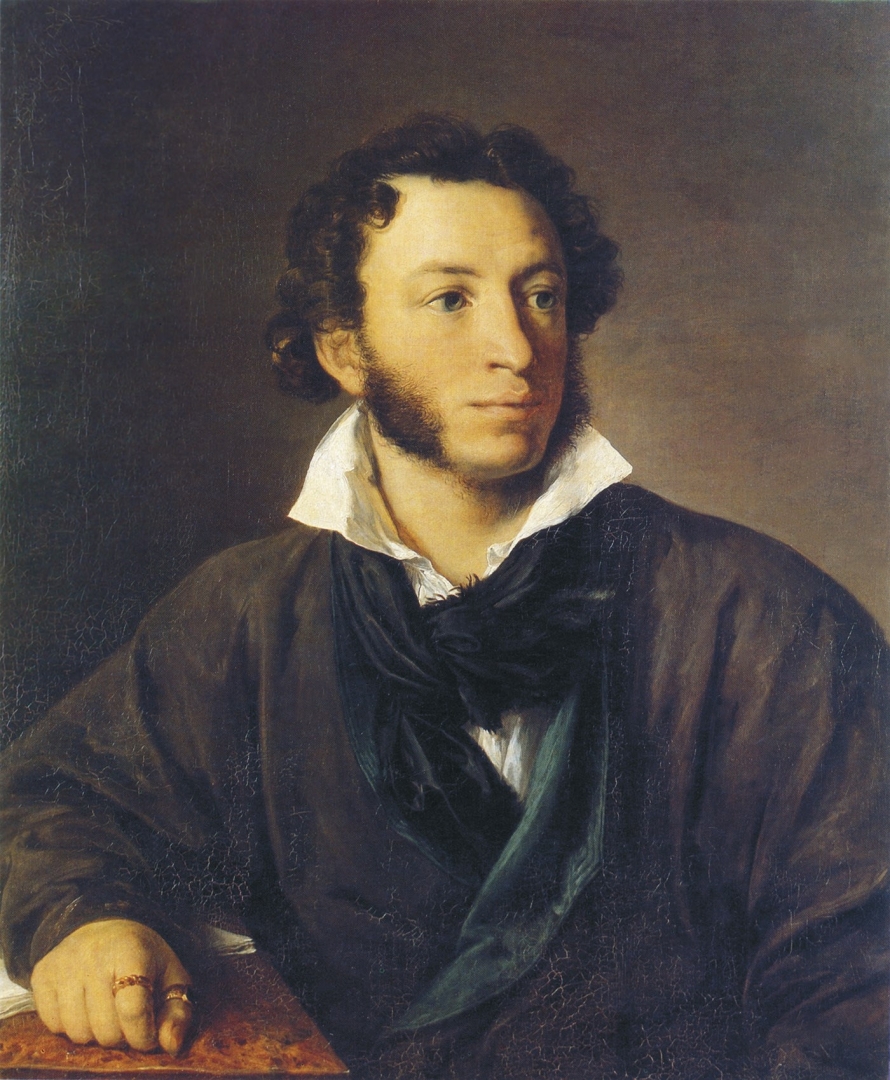
The letter P, of course, has to start with Alexander Pushkin, who would be a favorite just for his Повести Белкина (Belkin Tales) (previous post) and the short story “Пиковая дама” (“Queen of Spades”). They get better for me with each rereading. And then there’s all the poetry…

Moving into the Soviet era, I can’t not mention Boris Pasternak, whose Доктор Живаго (Doctor Zhivago) I read multiple times in grad school. Even if I didn’t enjoy Zhivago as much when I read it four years ago (previous post), I still have a deep sentimental attachment to my experiences (re)reading and talking about the book in school, trying to figure out the meaning of the rowan tree and gathering references to sources of light so I could write a paper. Plus there’s the Pasternak dacha, which I visited regularly when I lived in Moscow.

File:Andrei Platonov's grave, Moscow Armenian cemetery.jpg
Platonov's grave, Moscow. 
Then we have Andrei Platonov, whose “Возвращение” (“The Return”) is one of the most perfect short stories I’ve ever read. I think “Родина электричества” (“The Motherland of Electricity”) was my introduction to Platonov, though, followed by his difficult Котлован (The Foundation Pit) (previous post) and his wonderfully disorienting Ювенильное море (Juvenile Sea or Sea of Youth) (previous post). I think disorientation is what I love so much about Platonov: his word choices, word order, and word inventions create texts that jar me linguistically and emotionally. Platonov may be my favorite of these favorites. 

Another favorite is Vera Panova, whose novella Серёжа (translated as Seryozha and Time Walked and A Summer to Remember) is a beautiful account of a child’s life with his mother and new stepfather. My previous post generated lots of very enthusiastic comments from people who first read Seryozha in Tamil, Bengali, and other languages. I thought Panova’s Спутники, (The Train), about people who work on a hospital train during World War 2, was also very good.

Among contemporary writers, Zakhar Prilepin is probably my closest to a favorite, thanks to his Грех (Sin) and a few short stories that I also thought were very good; I enjoyed his political novel Санькя (San’kya) far less.

Bonus! Daniel Kalder, who writes a weekly column for RIA Novosti, sent the link to his interview with Russian critic Lev Danilkin; it’s in English. Danilkin mentions Prilepin and another P writer—Victor Pelevin—as popular, even naming Pelevin when asked “Who are the great authors of today?” I was particularly happy to see Danilkin mention books that discuss the October events of 1993… Enjoy!

Up next: Andrei Rubanov’s Жизнь удалась (All That Glitters, on his literary agency’s page). And more soon about Read Russia and BookExpo America… 

Photo: SreeBot, via Wikipedia

Sunday, October 4, 2009

Notable New Translations: Life Stories, Scary Fairy Tales, Resurrection, and Belkin

Late summer and early fall brought a varied crop of translations:

-The anthology Life Stories, published by Russian Information Services, translates most of the short stories in a Russian collection that came out in Russia earlier this year: Книга, ради которой объединились писатели, объединить которых невозможно (hmm, roughly: A Book for the Sake of Which Writers Impossible to Get Together Got Together).

Like Tin House’s Rasskazy (previous posts), Life Stories contains stories by contemporary Russian fiction writers… but the writer rosters differ greatly. Rasskazy writers are all 40 or under, and many of them are relatively unknown. Though the Life Stories writers aren’t exactly old timers, the collection includes big names like Evgenii Grishkovets, Vladimir Voinovich, Dina Rubina, Vladimir Makanin, and Viktor Pelevin. Only one author, Zakhar Prilepin, has a story in each book; I began Life Stories with his “Grandmother, Wasps, Watermelon” (Бабушка, осы, арбуз), translated by Deborah Hoffman. Life Stories also includes Alexei Bayer’s translation of Andrei Gelasimov’s “Жанна” (“Joan”), which I wrote about in this previous post.

I’ll write more about the collection later this fall but want to add that Life Stories is not just an anthology. Like its Russian counterpart, the book’s sales benefit the Vera Hospice Charity Fund and hospice care in Moscow. All profits go to the fund, and the writers and translators waived their fees and royalties.

Also: There will be a Life Stories reading on Saturday, October 17 at 4-6 p.m., at the Museum of Russian Icons in Clinton, Mass. (PDF of event information)

-A new book of Ludmilla Petrushevskaya’s stories, There Once Lived a Woman Who Tried to Kill Her Neighbor’s Baby: Scary Fairy Tales, collects stories translated by Keith Gessen and Anna Summers. For a sample, read “The Fountain House,” which appeared in The New Yorker this summer. There is also a Petrushevskaya story in Life Stories: “Joe Juan” (“Джо Жуан”) translated by Lise Brody.

-Tolstoy’s Resurrection, I learned from the Literary Saloon, has been retranslated by Anthony Briggs and published by Penguin Classics. I, too, found the book curious when I read it several years ago. As I wrote in handouts for a “Forgotten Classics” literature workshop, a lot of Resurrection is fairly obvious, but, thanks to stylistic and thematic differences and similarities, the book should be interesting for people who have read War and Peace and Anna Karenina.

Pushkin’s Tales of Belkin also recently reappeared, thanks to Melville House, in a translation by Josh Billings, a Portlander. I’ve read these stories enough times that the words in Josh’s translation feel familiar, even in English. That’s a bit eerie but also very welcome because his translations feel clean and modern, just as Pushkin’s language does. (previous post on The Belkin Tales)


Life Stories: Original Works by Russian Writers on Amazon

There Once Lived a Woman Who Tried to Kill Her Neighbor's Baby: Scary Fairy Tales on Amazon

Sunday, June 14, 2009

Back to Classics: Pushkin’s Belkin Tales

“Кто бы он там ни был, а писать повести надо вот этак: просто, коротко и ясно.”

“Whoever he is, stories should be written that way: simply, concisely, and clearly.”

-A.S. Pushkin on the identity of the writer known as Ivan Petrovich Belkin

The Writer: Aleksandr Pushkin

Work and Date: Повести Белкина (The Belkin Tales) (published 1831). The tales are: “Выстрел” (“The Shot”), Метель” (“The Blizzard”) Гробовщик” (”The Coffin Maker”/“The Undertaker”), Станционный смотритель” (“The Stationmaster”/”The Postmaster”) “Барышня-крестьянка” (“The Gentry Girl Peasant”/“The Squire’s Daughter”).

Why it’s important: Pushkin’s first completed, published prose. Interesting takes on narration and genre that continue to resonate in Russian fiction.

Online criticism, analysis, and background: Pushkin by John Bayley. Introduction to Tales of the late Ivan Petrovich Belkin, translated by Alan Myers. The Pushkin Handbook. And to see what Russian children are taught: a (Russian-language) lesson plan for “The Stationmaster.”

IMHO:

Part of the fun of Pushkin’s Belkin Tales is that they function like a mirror, taking on varied meanings depending on the reader’s mood, experience, and preferences. They are autobiographical. They are parodies. They are miniatures depicting the time. And so on. When I first read some of the stories – “The Stationmaster” and “The Shot” were among the first fiction I ever read in Russian – I felt simple gratitude to Pushkin for writing stories that even a third-year Russian student could understand.

Though I’ve always enjoyed the stories, reading them now, without a dictionary and with more experience recognizing genres and stock phrases, I take in The Belkin Tales much differently. I feel the autobiography, I feel the parody, and I feel the times. More than anything, though, I feel Pushkin’s skill as a prose writer.

I know that sounds like a weak, meaningless statement, but Pushkin’s achievement of “simply, concisely, and clearly” is, I think, what keeps the stories feeling so fresh and contemporary more than 150 years after they were written. Tolstoy said every writer should study them, and I couldn’t disagree: Pushkin cut out unnecessary words and description, leaving, to paraphrase Elmore Leonard, only the parts people want to read.

What makes the freshness so paradoxically unique, though, is that The Belkin Tales incorporate so many phrases, plot twists, and characters from genres popular in Pushkin’s time. “The Shot” features romanticism and a Byronic character, “The Blizzard” includes a ridiculously incredible coincidence, “The Stationmaster” is a sentimental, teary family drama, “The Coffin Maker” is a grotesque with ghosts, and “The Gentry Girl Peasant” depicts a young noblewoman who dresses as a peasant. The Belkin Tales have an almost embarrassing effect on me: each time I read them I get so caught up in enjoying the narration and subsequent atmosphere that I forget the endings, most of which are predictably genre-appropriate.

Why do I so willingly suspend my disbelief? Oddly, I think the answer lies in Pushkin’s overt exposure of storytelling techniques and their effects, which always has a way of affecting this reader’s expectations. Pushkin frames each story in multiple ways: he introduces the series of stories, which were allegedly told to and gathered by one Ivan Petrovich Belkin (rest his soul), resulting in a nested set of narrators and commentators. Even more interesting, I think, the narrators often inject themselves into their stories.

The teller of “The Coffin Maker,” for example, refuses to describe clothing, deciding to deviate “в сем случае от обычая, принятого нынешними романистами” (“in this case from the accepted habit of today’s novelists”). In “The Gentry Girl Peasant,” the narrator acknowledges the story’s readers and notes that gentry women learned about life from books. The story’s slightly goth hero, who wears a black ring “с изображением мёртвой головы” (I love this literally: “with an image of a dead head”), even teaches his beloved peasant girl (who is actually a gentry girl) to read, thinking she is illiterate. They read Nikolai Karamzin’s “Наталья, боярская дочь” (“Natalya, the Boyar’s Daughter”), a story that shares themes with “The Gentry Girl Peasant.”

I could go on and on about the intricacies of these stories, so I'll stop with this. I’m not sure I have a favorite Belkin tale, but it’s easy to name favorite aspects of two individual stories: I love the many layers of life imitating fiction in “The Gentry Girl Peasant,” and I also enjoy the melodrama, tautness, and prodigal child element of “The Stationmaster.” More than anything, though, I can’t believe how strongly this brief collection grabs me on every reread.

Summary:

The Belkin Tales are a wonderful example of pleasant, easy reading that has deeper meaning. Read these stories for whatever reason you like: pure plot enjoyment, a window into life and morals in another time, or to analyze genre and Pushkin’s narrative devices. No matter how or why you read them, the stories are a perfect prose introduction to Pushkin, his use of language, and his willingness to experiment.


Saturday, June 6, 2009

Happy Birthday to “Наше всё" & Newish Translations

A.S. Pushkin. Today marks 210 years since the birth of Aleksandr Pushkin, the Russian writer also known as “наше всё” (“our everything” or “our all”). (Thanks to Josefina of Russian Blog for the Pushkin birthday reminder.)

The “our everything” tag originated in 1859 with critic Apollon Grigor’ev’s article “Взгляд на русскую литературу со смерти Пушкина” (“A Look at Russian Literature Since the Death of Pushkin”) (a brief Russian piece on the subject or the entire Russian-language Grigor’ev article). The label stuck. I particularly like Pushkin’s Повести Белкина (Belkin Tales), which became the source of my predilection for the Belkin brand of computer cables.

New Translations. I spent a few hours at BookExpo America last week, where I was reminded of several relatively new translations of Russian books. It was nice to see them on display!

Seven Stories Press released Marian Schwartz’s translation of Ivan Goncharov’s Обломов (Oblomov) last December. Schwartz translated the L.S. Geiro version of the original, which Seven Stories calls “definitive.” It was published in 1987.

New York Review of Books introduced a new translation of Andrei Platonov’s Котлован (The Foundation Pit) in April 2009. This translation, too, is based on an edition of the manuscript now considered definitive. I think the most interesting aspect of this translation is that it is the work of Robert Chandler, Elizabeth Chandler, and Olga Meerson… making it Robert Chandler’s second translation of the book. R. Chandler provides background in this Amazon.com comment. (Previous post on The Foundation Pit)

Finally, Ardis Publishing is now part of the Overlook Press, the house that offers Today I Wrote Nothing, Matvei Yankelevich’s translation of selected works by Daniil Kharms (2007). A paperback version will be out at the end of this month. Ardis offers a smallish but varied list of Russian books in translation, including two of my favorites, Vladimir Makanin’s Лаз (Escape Hatch) and Долог наш путь (The Long Road Ahead), plus yet another version of The Foundation Pit, this one translated by Thomas P. Whitney. (Previous post on Makanin’s novellas)

One more “finally”… If you’re looking for Russian books in new English translation and missed last week’s post on the 2009 Academia Rossica prize, here’s a direct link to the PDF of the Rossica Prize brochure. It includes a list of all nominees plus excerpts from the finalists, in Russian and English, making it a particularly fun piece for bilingual reading.

Pushkin on Amazon

The Foundation Pit on Amazon

Marian Schwartz's translation of Oblomov

Baby Pushkin portrait by Xavier de Maistre, 1800-1802

Sunday, March 30, 2008

Today’s “Times”: Pushkin (x2), Women’s Vodka, and Prague

Did you ever dump a date for not knowing about Pushkin? Rachel Donadio’s essay, “It’s Not You, It’s Your Books” addresses this and other sensitive questions of literary taste in today’s New York Times Book Review. The Times added a blog entry from Donadio, “Literary Dealbreakers,” which already has 124 comments about the (un)importance of books in relationships. 


Meanwhile, nobody can accuse Russian baritone Dmitri Hvorostovsky of not knowing Pushkin: he sings Pushkin’s words in Eugene Onegin and recently recorded an album of music with Pushkin texts. The article: “The Power of Russian Birthright

As for the vodka. The Style section included a piece called “Russian Vodka With a Feminine Kick” about, yes, vodka for women. The ad pictured in the Times features the phrase “между нами, девочками” (between us girls), a common phrase I particularly enjoy hearing from men. When I searched the brand, Дамская водка (Ladies’ vodka), the first Google result was an article called (in my translation) “’Ladies’’ Vodka Worries Doctors.” The first line: “A new drink especially for representatives of the weak sex appeared in Russia at the beginning of the year.” I just report this stuff.

Finally, it’s not about Russia, but this Travel section article on Milan Kundera’s Prague is Slavic and literary in theme. Franz Kafka even makes a cameo appearance.

Friday, November 9, 2007

Reading Russian Classics Needn't Be Painful!

Who would have thought that the novel no high school student has ever finished reading would make such engrossing theater?
-"Dostoevsky's Homicidal Student, the 90-Minute Version," The New York Times, November 9, 2007

Maybe I should demand a correction from Times: I did finish Crime and Punishment in high school. Trust me, I do have a sense of humor, but sometimes it gets tedious to read hyperbolic references to Russian literature in the mainstream press... Nobody has ever finished Crime and Punishment before retirement!... War and Peace, that Everest of novels, has littered the path to enlightenment with oxygen-deprived bodies for over a century!

So what's the problem? Russian lit just needs some better P.R. Yes, many Russian novels are quite long, and many have portentous titles. For me, that's a big part of their appeal. If I like a book, I don't want it to end. And what good is a book if it doesn't consider something serious, whether through comedy or tragedy?

In truth, when you reduce most novels -- from Danielle Steele to Dennis Lehane to Dostoevsky -- down to bare motifs, most turn out to address life, love, and death, with a few subplots thrown in. One Russian theorist, Vladimir Propp, analyzed fairy tales and found only 31 basic plot turns and 8 characters. Take a look, and you'll find that many of Propp's functions apply to literature for adults, too.

Joking that Russian novels are all long and boring might score easy laughs for journalists and readers who haven't touched the books, but there are plenty of relatively simple ways to make even the longest novels more accessible:

Start Short. Sometimes a big masterpiece isn't the best introduction to a writer, particularly if you're not taking a college class. Read something smaller -- a short story or novella -- but well-regarded first to get a feel for the author's views and styles. Then work up to the doorstops. For example:

Pushkin: Try Повести Белкина (The Belkin Tales) before Евгений Онегин (Eugene Onegin). The Belkin stories may be prose to Onegin's poetry, but they're short, very enjoyable, and an important part of Russian literary history.

Dostoevsky: Try the shorter, romantic Белые ночи (White Nights) or spite-laden Записки из подполья (Notes from Undergound) before Crime and Punishment or The Brothers K. These novellas show different sides of Dostoevsky's psychological approach to fiction.

Tolstoy: Novellas like Хаджи Мурат (Khadzhi Murat) and Казаки (The Cossacks) show a lot about Tolstoy's philosophical views, including what happens when cultures come together.

Don't Panic about Russian Names. Some translations of novels include lists of characters, along with nicknames. Make your own if the book doesn't have one. If you want to learn a little more about Russian names, you might want to read this PDF handout that I wrote. You might also like this fairly lengthy list of diminutive forms (nicknames).

See the Mini-Series or Movie. I love to imagine scenes when I read, but sometimes seeing them illuminates meaning: my high school English teacher helped us through Crime and Punishment by showing a PBS mini-series. And even after reading Master and Margarita twice, it took watching the Russian mini-series adaptation for me to truly grasp the horror of what Bulgakov wrote about Satan's ball.

Read the Introduction. Yes, I often skip author bios and introductions, too. But even my small Signet Classic paperback edition of Crime and Punishment from high school includes concise information that illuminates what happens in the book. Background on Dostoevsky mentions his commuted death sentence and philosophy, and the translator's introduction notes the roots of many of the characters' names.

Find It in Translation. Literary translation requires endless decisions, so results vary a lot. Should the translator divide long sentences? Repeat the repetition of the original? Test read the first few pages of different translations to see what fits your taste. If you compare translations of Dostoevsky, you are likely to see that some translators feel compelled to simplify his writing. English and American editions may differ greatly, too.

In the end, any translation is a compromise -- most people would read originals, not translations, if they could -- so find whatever will keep you reading. Don't worry if the translation with the best reviews feels worse to you than an older or cheaper version with no blurbs. Take what you will enjoy: even if that version is a little further from the original than another, you're still much closer to the author's message than if you hadn't read the book at all.

Some recommended Amazon.com listings mentioned in this posting:
Crime and Punishment
The Complete Prose Tales of Alexandr Sergeyevitch Pushkin
The Best Short Stories of Fyodor Dostoevsky (Modern Library)
The Cossacks and Other Stories (Penguin Classics)