Showing posts with label Vladimir Sharov. Show all posts

Sunday, March 12, 2023

Favorite Russian Writers A to Я: Shalamov and Shklovsky

I wrote my last alphabet post (it’s here!) a little over two years ago, covering the letter Ч (Ch), which was productive but not rich with writers I considered real, true favorites. Today I present to you the letter Ш (Sh), which is highly productive in terms of the sheer number of writers whose surnames begin in Sh… though there aren’t many I yet consider serious favorites.

I’ll start with Varlam Shalamov since he’s probably the Sh writer I (hm, what word to choose?) revere the most, thanks to the beautiful and spare prose of his Колымские рассказы (Kolyma Tales), which document experiences in Soviet-era prison camp. Some years ago I took some good advice and read one Shalamov story each evening. I read him that way for several weeks; dozens of short stories in my nine-hundred-page book await me. Here’s a previous post (about cold and snow) where I mentioned that reading. I highly recommend Shalamov to all readers.
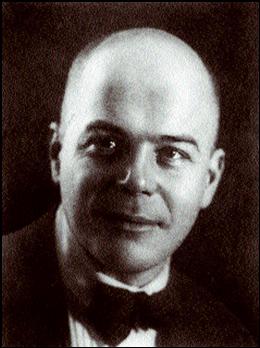

Things start to get much foggier after Shalamov so I’ll start with Viktor Shklovsky, whom I read in grad school, but have (unjustly) pretty much ignored for decades. I think I (probably?) read him first for literary theory – most likely “Искусство как приём” (here it is in English! “Art as Technique”) – and, since I enjoy literary theory, I’ve pecked away at his theoretical writings over the years. I even have a nice edition of Energy of Delusion: A Book on Plot, translated by Shushan Avagyan for Dalkey Archive Press, who gave me a copy of the book at BookExpo America. I should read it in full one of these days/years. I read Shklovsky’s Сентиментальное путешествие (Sentimental Journey) in full decades ago, though I’d be lying if I said I remember much beyond a quick summary: it contains his recollections about the Russian Revolution and Civil War. I’ve recently had thoughts of rereading it. I have much more work to do on Shklovsky! Particularly since I have yet to read Зоо, или Письма не о любви (Zoo, or Letters Not About Love, which Jennifer Wilson discusses here, in The New York Times), an embarrassing gap in my reading since I vowed to read it after finishing Alisa Ganieva’s dishy (as I put it) page-turner of a biography of Lily Brik… I wrote of the Shklovsky connection here. I’ll end by adding that I nearly forgot to mention that Shklovsky coined the term “остранение,” a word usually translated as “defamiliarization.” I love the word and what it describes.

And now to start on my stack of contemporary Sh writers’ books… Mikhail Shishkin has impressed me most in recent years with essays, both about Russia’s politics and invasion of Ukraine, and about writers. His lengthy piece called Бегун и корабль (The Runner and the Ship), about Vladimir Sharov, is particularly good – written about a beloved friend and his books – but I also loved reading his essay about Robert Walser, who is somehow terra incognita for me. As yet. Sharov is, of course, a Sh writer as well… and, as I’ve mentioned many times, he’s difficult for me to read, in large part because, sadly, I’m so biblically illiterate. (Foisting Sunday school on me was utterly counterproductive because I don’t like singing or memorizing. Reading the Bible itself during sermons on weeks when there was no Sunday school, however, was fun because I could read freely.) I’m still committed to putting lots more time into Sharov because I so enjoyed knowing him and still, despite not having known him very well, mourn his death because (as I’ve also written many times, including here) he was so otherworldly. Odd though it sounds, I still feel as if he simply couldn’t die, even physically. My strategy is still to restart my Sharov reading with his Будьте как дети (Be As Children), which I read and enjoyed nearly half of before I had to sample his other books to prepare for moderating an event… This article – “How Sharov’s Novels Are Made: The Rehearsals and Before & During” – written by my friend and colleague Oliver Ready, who has translated several of Sharov’s novels, looks like it will provide some of the hints (and pushing) that I need. Perhaps it will help others, too. Before & During, by the way, is the only Sharov novel I’ve finished as yet. I wrote about it here after Sharov won the Russian Booker in 2014 for Возвращение в Египет (Return to Egypt). I read the novel in Oliver’s translation, which Dedalus Books kindly sent to me; Dedalus has also sent copies of Oliver’s translations of Be As Children and The Rehearsals.

Vasily Shukshin, one of the most prominent (and, best, to my taste) “Village Prose” writers, is also in the Sh pile. I read his long and short stories every now and then and always seem to enjoy them, even when they’re sad as hell, like his Калина красная (The Red Snowball Tree), a novella that Shukshin didn’t just write. He also directed a film adaptation… and starred as the main character, a thief who’s been released from jail. On another note, yes, there are also a few women writers with Sh surnames. One of them, Ekaterina Sherga, wrote Подземный корабль (The Underground Ship), which I praised highly in 2013 (previous post). I believe Ship is Sherga’s only novel. There’s also Marietta Shaginyan, whose Месс-Менд (Mess-Mend) I read in 2005, finding it especially interesting as a 1920s period piece but a bit messy as a detective novel with nasty capitalists.

So! I still have plenty of reading ahead from letter-Ш writers like Shklovsky, Sharov, Shukshin, and Shalamov. I’d love to hope for more Sherga, too… I also have some unread Sh authors on the shelves: Ivan Shmelev, whose Солнце мертвых (The Sun of the Dead) Languagehat read last year (and called “grimly powerful”). It’s set in Crimea during wartime, in 1921. There’s also Roman Shmarakov’s Алкиной (Alcinous), which was a 2021 NOSE finalist – why not try a Russian novel set in the Roman Empire during the fourth century? And then there’s Vyacheslav Shishkov’s Угрюм-река, which Victor Terras, in A History of Russian Literature, calls Grim River, writing that it’s “about the colonization of Siberia.” The index of Terras’s book lists other Sh writers, including (of course) Mikhail Sholokhov, who didn’t endear himself to me much with Quiet Flows the Don decades ago… I’ll stop there and watch for thoughts on other letter-Ш writers!

Up Next: I have lots of catching up! Some of you have written to me in recent months, asking when/if I’ll ever post regularly again. I think (hope?) this is my start. I’m very grateful for readers’ kind notes, gentle questions, and tact. I’m especially grateful to one of you for writing to me last week, asking just the right questions at just the right time. Edit, March 13: After receiving a note from a worried friend, I want to add that I am fine. Blogging takes a fair bit of time; more than anything, I needed to spend more time on other things (particularly reading since I’ve had a lot of “required reading” of late) in recent months.

Disclaimers and Disclosures: The usual for knowing some of the contemporary writers (and their translators and publishers!) whom I’ve mentioned above. Thank you again to Dedalus for sending Oliver’s meticulous translations of Sharov’s novels, which I like reading along with the Russian originals.

Monday, December 31, 2018

Happy New Year! & 2018 Highlights

Happy New Year! С Новым годом! Wherever you are, whenever you read this, I hope the holidays have been enjoyable and I wish you lots of good reading in 2019!

Reading in 2018 followed the same pattern as the last several years, with good novels to translate but a dearth of satisfying new books to read. Although I don’t track the numbers, I’m certain I abandoned far more books than I finished. Despite that – and far too many pieces of sad news – there were some nice reading surprises this year, plus great travel and even some positive developments on the translation side of things. Here are some highlights:

Favorite book by a new author: One of my favorite reading highlights this year was Grigory Sluzhitel’s Дни Савелия (literally Savely’s Days) (previous post), which came highly recommended by Eugene Vodolazkin. Savely slinked his way into my heart thanks to his penchant for valerian, love for traipsing around Moscow, and smooth way with words. Savely’s Days would have been a favorite even in a good year but in this lackluster reading year, the book particularly stood out for its observations of people, cats, and Moscow.

Most enjoyable books written by authors I’d already read: Sergei Kuznetsov’s Учитель Дымов (Teacher Dymov), which, oddly enough, I haven’t written about, is a sort of ensemble family saga novel, a book where characters, psychology, and the little things in life are the focus, (generally) leaving historical crises of the Soviet and post-Soviet eras in the background. The book is vivid and detailed as it flows from generation to generation and it kept me up late reading. I also enjoyed Yulia Yakovleva’s Укрощение красного коня (Taming the Red Horse) (previous post), an atmospheric retro detective novel that plays with genre.

An unexpected achievement: I finally read and finished a Strugatsky Brothers novel, Град обреченный (available in English as Andrew Bromfield’s The Doomed City, Chicago Review Press) (previous post) in Russian! There are plenty of thoroughly repellant characters in the novel but it’s, hmm, intriguing in its own odd way so kept me reading and then thinking, too, as did Eduard Verkin’s Остров Сахалин (Sakhalin Island) (previous post), which got under my skin like some sort of stubborn rash or parasite. (Verkin’s Sakhalin still won’t quite let me go so I was glad that a visiting Russian friend had just read it, too, so we could talk.)

Favorite English-language reading: I seem to have read a higher percentage of satisfying books in English this year than in Russian: Janet Fitch’s The Revolution of Marina M. is the start of a big, thick novel about a young woman who comes of age at the time of the October Revolution. I also loved Curzio Malaparte’s The Kremlin Ball, translated by Jenny McPhee, a piece of writing (fiction? nonfiction? both? does it matter?) about Moscow in the late 1920s. (previous post on both) Another good one: Sofia Khvoshchinskaya’s Городские и деревенские, known in Nora Seligman Favorov’s very pleasant English translation as City Folk and Country Folk. I described the book in a previous post as “a fun, smart nineteenth-century novel.”

Speaking of translations: I was very pleasantly surprised to find that this year’s list of Russian-to-English translations topped sixty entries (previous post). There’s something for everybody – we’ll see if the 2019 list can come close to 2018’s in terms of quality and quantity!

Happiest things while traveling: Despite seeming to have a reputation as a bit of a recluse (I think living in Maine and burning wood for heat gives that sort of impression automatically) I really do love going to translator conferences and book fairs. This year’s trips – to Moscow for a translator conference (previous posts 1 and 2) , Frankfurt for the book fair (previous post), and Boston for a Slavist convention (post coming soon!) – were especially enjoyable not just for my papers and presentations but for having the chance to see colleagues. Though I should really say that a good deal of this “seeing” colleagues is really the chance to “eat with” colleagues. Thanks to them, “the most important meal of the day” takes on new meaning, eating wurst and French fries in Frankfurt becomes something positively lovely especially under a warm (!) October sun, and late dinners are a perfect way to finally sit longer and, yes, eat slower (food) after rushing around all day. It’s the people I see at these events – translators, writers, publishers, literary agents, event organizers, and even a few people from my distant academic past – who make travel so enjoyable despite jetlag and packed schedules. I’m a very, very fortunate person.

Best acquisitions: My newish Kobo Aura One electronic reader makes it almost pleasant to read electronically even if the device doesn’t particularly like PDFs. And A History of Russian Literature by Andrew Kahn, Mark Lipovetsky, Irina Reyfman, and Stephanie Sandler is a great (and gigundo) addition to my library that the good people of Oxford University Press were only too happy for me to take off their hands toward the end of the Slavist conference. It’s already come in handy quite a few times and even the index is fun to page through! Special thanks to the nice Marriott employee who helped me cram it into my luggage for the ride home.

Final goodbyes: Sadly, 2018 brought the deaths of Vladimir Voinovich (previous post), Vladimir Sharov (previous post), and Oleg Pavlov (previous post), all of whom I’ve written about, as well as Andrei Bitov, whom I’ve read so little that I’m not even sure what to say other than something absurdly banal about recognizing his importance. (And that I need to buy a better, newer edition of his Pushkin House – the late Soviet-era edition I have is fuzzily printed on awful paper, making it painfully difficult to read.) The loss of Sharov still gives me no peace.

What’s coming up on the blog: Despite my complaints about 2018’s Big Book finalists (previous post) and the high ratio of “abandons” in my reading for much of the year, things are looking up: I loaded up on books in Moscow and Frankfurt, and have been a much happier reader since my required reading period ended. I’ll also be reading mostly books written by women until mid-March, when I’ll be participating in a panel at the London Book Fair about women in literature and translation. I have quite a shelf of recent Russian books, thanks to my own purchases plus gifts from authors, publishers, and the Russian stand in Frankfurt. My stack of English-language books written by women, many of which are translations from various languages into English, is even larger. Best of all is that I haven’t abandoned a book in weeks: I’m on a roll with Alisa Ganieva, Ludmila Petrushevskaya, Yulia Yakovleva, and Olga Stolpovskaya. On the English side, I’ve been reading Lara Vapnyar and just started Anna Burns’s Milkman today (a gift from one of those wonderful meal-time colleagues I mentioned above). I’m reading Milkman on the treadmill, which fits the heroine’s habit of reading while walking, not to mention Burns’s skazzy writing, with its momentum and flow, as well as plenty of sly humor and word play.

On that cheery note: Happy New Year! And happy reading!

Disclaimers: The usual. As noted above, I received copies of some of the books mentioned in this post from publishers, literary agents, and other sources. Thank you to all! And thank you to everyone who helped with my travel in various ways. Also: I’m translating Sergei Kuznetsov’s Kaleidoscope.

Image credit: Fireworks in Bratislava, New Year 2005, from Ondrejk, via Wikipedia.

Sunday, September 16, 2018

Moscow Trip Report 1: Award News, Head Cold Edition

My recent week in Moscow was so filled with literary events that I’m going to split my trip report into two posts. Beyond all the material, I brought home a head cold along with a gigundo pile of books, so a slightly embellished list is about all I can handle today.

First off, Read Russia Award winners for what I think of as the global prize, for translation into all languages:

Marta Sánchez-Nieves won the nineteenth-century category for her Spanish-language translation of Lev Tolstoy’s Cевастопольские Рассказы (Sevastopol Stories), published by Alba. Anne Coldefy-Faucard won the twentieth-century award for her decades of work, in collaboration with Geneviève Johannet, on the French translation of Aleksandr Solzhenitsyn’s Красное колесо (The Red Wheel) for Fayard. Oliver Ready won the contemporary prize for his English translation of Vladimir Sharov’s Репетиции (The Rehearsals) for Dedalus Books. Finally, Kiril Kadiiski took the poetry nomination for his translation into Bulgarian of a collection of poems by Fyodor Tyutchev for Nov Zlatorog. Hearty congratulations to all!

A few award notes… The only other English-language finalist for awards this year was Boris Dralyuk’s translation of Isaac Babel’s Odessa Stories for Pushkin Press. Anne Coldefy-Faucard was also shortlisted in the contemporary literature category for her translation of Vladimir Sorokin’s Telluria. Another translation of Vladimir Sharov’s work was shortlisted: Ljubinka Milincic was recognized for her Serbian translation of Возвращение в Египет (Return to Egypt). The success of translations of Sharov’s work felt horribly bittersweet given his recent death. I felt his passing constantly: in Oliver’s acceptance speech, in discussions with friends who said many couldn’t fathom it (I fit that category), and in the portrait hanging at a bookstore. Most of all, though, I missed seeing him, if only for a brief chat.

On a more cheerful note, it was fun going to the announcement of this year’s Yasnaya Polyana Award finalists. Perhaps most interesting is that there are only three finalists from a long list (it did look pretty weak) of forty-three:
  • Aleksandr Bushkovsky for his Праздник лишних орлов (The Festival of Superfluous Eagles is how Yasnaya Polyana translated the title and, well, I’m just going to roll with that given that I haven’t read the book), a collection of stories about friends who fought together in Chechnya but can’t figure out what to do with themselves upon returning home. I’ve seen the Russian word for “eagles” used for distinguished soldiers and since these guys feel lost, “superfluous” feels like it refers back to the superfluous man. 
  • Olga Slavnikova for her Прыжок в длину (Long Jump), a book I find rather heavy with metaphors. Even so, I can understand Vladislav Otroshenko’s enthusiasm for the book given its real plot (the novel does just keep plugging along) and view of the world. I’ve read more than half and plan to finish it for my Big Book reading. Long Jump won the Book of the Year award while I was in Moscow, too.
  • Maria Stepanova for Памяти памяти (I’ll go for In Memory of Memory since I haven’t read it yet), which is on the way in English, too. Like the Slavnikova book, In Memory of Memory is also a Big Book finalist.
For a bit of commentary on the list, visit the Yasnaya Polyana site, here.

And then there’s this, just for fun: a list of hundred of the most important Russian books in the last thirty years. It’s fitting since the second book is Sharov’s The Rehearsals. There are some interesting entries!

Disclaimers: The usual. My head is addled.

Up Next: The rest of the trip report, English-language reading roundup, and Big Book finalists.

Sunday, August 19, 2018

Farewell to Vladimir Sharov

I’m very sad to write that Vladimir Sharov died last Friday at the age of sixty-six. Sharov was the author of such novels as Репетиции (The Rehearsals), До и во время (Before and During), both translated into English by Oliver Ready, and Возвращение в Египет (Return to Egypt), for which he won the Russian Booker Prize in 2014.


I didn’t know Sharov well but I’ve enjoyed talking with him at literary and translation events in Moscow and New York. Beyond speaking eloquently about his books, he was warm, quietly funny, and almost otherworldly. Those qualities – plus an on-the-page version of the twinkle in his eye – somehow come through in his writing, too, bringing a human touch to fiction that can be very dense, often with little dialogue. Sharov was also gracious and generous, giving me an extra copy of a thick collection of Platonov’s letters when I told him I’d translated a Platonov story.

I’ll be writing more about Sharov and his Rehearsals this fall. I’ve heard much (very lavish) praise for The Rehearsals among Russian friends who read a lot of contemporary fiction but I think I’m failing the book because my memories from Russian history courses are now so hazy and my religious background has always been worse than slipshod. Despite not making those big picture connections, I love the theatricality in The Rehearsals, the plot possibilities of a Second Coming are appealing, I sense Sharov’s twinkling eye in the humor, and Oliver’s translation both reads very well and compares beautifully with the Russian book, which Sharov was kind enough to give to me after we participated in a roundtable discussion at the Brooklyn Public Library. That’s a fair bit but my gaping knowledge gaps mean I can’t appreciate the book properly, particularly given the fact that I feel like I’m still (very, very slowly) finding my way around Sharov’s world, a place that’s wildly different from what I find in most of the books I read. Finding my way around that world feels all the more important to me now, so I’m looking at some remedial reading as a way to continue learning from Sharov. I’m grateful to him for our conversations and will very much miss seeing him when I visit Moscow next month.

Disclaimers: The usual. Thank you to Dedalus Books for a review copy of The Rehearsals. The Dedalus page about the book includes lengthy excerpts from reviews; the reviews by Michael Orthofer and Jamie Rann very aptly get at the novel’s rewards.

Sunday, June 14, 2015

New York Trip Report, Part One, Belated: Oliver Ready Wins 2015 Read Russia Prize

So much for timely trip reports about award ceremonies! That doesn’t mean I’m not still thrilled to say, more than two weeks later, that Oliver Ready received the 2015 Read Russia Prize for his translation of Vladimir Sharov’s До и во время, which Dedalus Books published with the title Before and During. I accepted the award for Oliver and am very excited for all involved: for Oliver, for Sharov, whom I met through Oliver, and for Dedalus Books.

Recognizing Oliver felt doubly appropriate because his Crime and Punishment translation was shortlisted for this year’s award, too. Given my interest in contemporary Russian literature, I’m especially happy Oliver won for the Sharov book—the decision came, by the way, through unanimous vote—both because I hope it draws attention to present-day writers and because I read and admired (previous post) Oliver’s translation.

Read Russia commended classics, too, by giving a special jury award to two new translations of Tolstoy’s Anna Karenina: Rosamund Bartlett’s translation was published by Oxford University Press and Marian Schwartz’s by Yale University Press. The jury’s statements on both awards are online here. I should note that this Read Russia Prize was for Russian-to-English translations only.

The Read Russia evening also included a talk from Gary Saul Morson, the man who taught me War and Peace twice: he spoke on the topic of “Because Everyone Needs a Little Russian Literature.” I’d wondered, in a previous post (about the Read Russia shortlist), if Dr. Morson took the title from a Read Russia bumper sticker. He did. My notes about his talk, alas, are even more inadequate than usual, most likely due to a combination of plain old tiredness after three days at BEA and excitement for Oliver.

I am happy to report, though, that, among other things, Dr. Morson quoted from a book by his pseudonym Alicia Chudo, noted the sense of moral urgency that Russian literature conveys, and spoke of literary characters as possible people, a formulation I like very much. Best of all, he read aloud, from translations: when I was a student, undergrad and grad, I didn’t understand why he read aloud to us, but have come to realize in recent years how much his readings helped me learn to hear the shadings of literary voices.

I would be remiss if I didn’t mention that Alex Cigale gave me a copy of the spring/summer 2015 issue of Atlanta Review: Alex edited the issue and it includes four or five or six dozen translations of Russian poems. Alex pulled together a fantastic roster of fifty poets (Shamshad Abdullaev to Ivan Zhdanov, if taken in the Roman alphabet’s A to Z) and several dozen translators, many of whom I know and have heard read from and/or speak about their work. I’ve only read a small sliver of the issue—every time I open the journal, I get happily stuck on Alyssa Dinega Gillespie’s lush translation of a Polina Barskova poem that starts with “Sweetness of the sweetest slumber/Sweet is sweet is sweet is dream” because I love what Alyssa does with rhythm and rhyme—but I can’t wait to read more, poet by poet, translator by translator. Alex reminded me that readers can get tastes of the poems (as well as background) from the Atlanta Review Facebook group, where posts often include lots of links. If you’re looking for very short notes, there’s also Twitter!

Disclaimers: The usual, including work for Read Russia. Thank you to Alex Cigale for Atlanta Review.

Up Next: Trip report, Part Two, BookExpo America book fair and event report. And two books: Eugene Vodolazkin’s Solovyov and Larionov, which I’ll start translating this summer, meaning soon, and Sergei Nosov’s Член общества, или Голодное время (something like Member of the Society or A Time of Hunger), the sad-but-funny story of a man’s life after selling all his Dostoevsky. And then: I’m currently reading Elena Minkina-Taycher’s The Rebinder Effect, which I’m enjoying very much. Rebinder didn’t catch me on several previous tries so I’m glad I kept trying because I’m finding it very, very readable. After that, I’ll be starting my Big Book Award finalist marathon, beginning with Guzel’ Iakhina’s Zuleikha Opens Her Eyes, which I’ve already started…

Saturday, December 6, 2014

More Miscellany: Booker Goes to Sharov… AATSEEL Awards… Russian Literature Week… Two Translations...

1. The Russian Booker Prize was awarded yesterday to Vladimir Sharov for Возвращение в Египет (Return to Egypt). Sharov won third prize from the Big Book Award jury last week, too, so he’s had a busy award season. In other Booker news, Учительская газета reported, in a newsy article, that Natalya Gromova’s Ключ. Последняя Москва (The Key. The Last/Final Moscow) won the Booker’s grant award, which covers the book’s translation into English. 

Return to Egypt has not (yet) been translated into English, Sharov’s До и во время does exist in English, in the form of Oliver Ready’s translation, Before & During. I’m not even sure where or how to begin describing Before & During: this complex novel’s frame story involves a man checking himself into a psychiatric hospital, where he begins compiling stories for a Memorial Book. The novel’s primary character, though, turns out to be Madame de Staël, who seems to give birth to just about everyone, including herself. I’ve seen the word “phantasmagoria” used to describe the book more than once, and it’s more than appropriate for Sharov’s quirky combination of religion, Russian history, and culture… Stalin, Lenin, Scriabin, and Tolstoy are among the real-life figures who put in appearances, making for alternative history at its most peculiar. Before & During has a peculiar charm, too: I don’t usually have much patience for monologues but something about the book’s wackiness and, I’m sure, Oliver’s lucid translation, mesmerized me and I finished, even though I’m not exactly sure what I read. This is (yet another!) book it would be fun to research while rereading. For detailed descriptions of Before & During, see Anna Aslanyan’s review for The Independent and Russian Dinosaur’s detailed account. Caryl Emerson’s review in the April 11, 2014, issue of The Times Literary Supplement (which I happened to buy) contains a summary of the scandal at the journal Novyi mir when Before & During was first published in the nineties.


2. The American Association of Teachers of Slavic and East European Languages (AATSEEL) announced its annual book awards last week. Most exciting (for me anyway!) was that Sibelan Forrester won the scholarly translation award for The Russian Folktale, by Vladimir Propp, published by Wayne State University Press. I loved reading Propp years ago in grad school so this was a great reminder that I’ve been meaning to buy Sibelan’s book of Propp. The best literary translation award went to Anthony Anemone and Peter Scotto for I Am a Phenomenon Quite Out of the Ordinary: The Notebooks, Diaries, and Letters of Daniil Kharms, published by Academic Studies Press. Sophia Lubensky’s revised Russian-English Dictionary of Idioms (Yale University Press) won the language pedagogy award—I use an older edition of this book and find it ridiculously helpful in my translation work. Part of the fun of Lubensky’s dictionaries is that they include quotations from literature, with English translations… the new edition apparently includes contemporary authors like Akunin, Pelevin, Ulitskaya, and Sorokin. Finally, Katia Dianina won the award for literary and cultural studies for When Art Makes News: Writing Culture and Identity in Imperial Russia, published by Northern Illinois University Press.

3. I spent about 1.5 days in New York last week for Read Russia’s first annual Russian Literature Week festivities, enjoying two panel discussions: one panel looked at nineteenth-century classics, with translator Marian Schwartz, New York Review Books editor Edwin Frank, and Esther Allen, a translator from the Spanish and associate professor at Baruch College; the other panel focused on differences between translating classics and contemporary literature, with Marian Schwartz, Russian and Polish translator and New Vessel publisher Ross Ufberg, and translator and Columbia University professor Ron Meyer. I kept terrible notes but, in the midst of hearing about books like Marian’s translation of Anna Karenina, The Captain’s Daughter from Robert and Elizabeth Chandler, and Ross’s work on Vladimir Vysotsky’s stories, my memory zeroes in on two topics that I always find especially relevant and interesting: making sure the beginning of a book, particularly the very first page, has, as Marian put it, “zing,” and the special challenges of working on what will be an author’s debut in English. I also jotted down that someone said the word “pal” dates back to Shakespeare… this was interesting to learn since I’m using the phrase “be a pal” for a contemporary-sounding utterance in my translation of Vodolazkin’s Laurus, a book set in the Middle Ages that includes a spectrum of language ranging from archaicisms to modern slang. Flexibility is fun!

Speaking of fun: a highlight of Russian Literature Week was seeing translator friends. And it was particularly fun to see Katherine Dovlatov after reading Pushkin Hills, her translation of Sergei Dovlatov’s Заповедник. I read the first half of Pushkin Hills on a non-fun JetBlue flight last summer. But if ever there was a perfect book for a delayed flight on a stifling plane, this is it. Pushkin Hills tells, in first-person narrative, the story of one Boris Alikhanov, who has marital troubles as well as a job as a tour guide at the Pushkin Hills Preserve. Although I will always prefer the first half of the book—for its focus on the wonderful absurdity of working at a place dedicated to Pushkin (Our Everything!)—I came to appreciate the second half more. The novel’s second act includes a visit from Alikhanov’s wife and a visit to a KGB officer. Dovlatov’s humor felt absolutely perfect on that hot, tardy plane, thanks to, of course, a very funny original plus, of course, Katya Dovlatov’s translation, which renders her father’s short sentences into funny, colloquial English that reads beautifully. (Let me just say: that is not easy.) I think Katya succeeded so well because, as she notes in this Paris Review interview, she read the Russian out loud and then tried things out in English, “to keep the same musicality, the same tone.” She made lots of bang-up word choices, like scrud and booze-up, that capture the feel of her father’s novel and keep the text lively. And keep me laughing. No easy feat on a late airplane, particularly for a book I first read and enjoyed in Russian. Pushkin Hills was published in the U.S. by Counterpoint Press and in the U.K. by Alma Classics. Also of interest: Marisa Robertson-Textor’s “All Dovlatov’s Children: Recent Soviet Émigré Literature.”

Up Next: Back to the books, starting with Marina Stepnova’s Безбожный переулок (Italian Lessons) or Evgeny Vodolazkin’s Solovyov and Larionov. There are also lots more English-language translations and originals on the shelves, just waiting. I’m not sure, though, about Prilepin’s The Cloister… it might have won the Big Book last week, but after nearly 300 pages, The Cloister feels a little too big, a little too wordy, and a little too stuffed with, well, stuff that could have/should have been pared down a bit. Or a lot. But we’ll see.

Disclaimers: The usual, for knowing so many people in this post. Thank you to Dedalus Books for the copy of Before & During and Counterpoint Press for Pushkin Hills. Read Russia brought me to New York for Russian Literature Week.

Tuesday, November 25, 2014

The 2014 Big Book Award Winners

Just a very quick post with this year’s Big Book Award winners. There weren’t any real surprises here. I would have loved to have seen Evgeny Chizhov win something—anything!—for his Translation from a Literal Translation, (previous post), which I liked so much but, well…


The jury awards went to:
  • The top prize was awarded to Zakhar Prilepin’s Обитель (The Cloister). A novel about the Solovetsky Islands in the 1920s. The Cloister already won the Book of the Year award and is also a finalist for the Russian Booker. I’ve been reading The Cloister for a while and it will take me another while to finish: it’s very long and rather detailed.
  • Vladimir Sorokin took second place for Теллурия (Tellurium). On my NatsBest long list post, I wrote: A polyphonic novel in 50 highly varying chapters. I read about 150 pages before setting Tellurium aside: Sorokin’s use of a futuristic medieval setting, tiny and huge people, kinky stuff, sociopolitical observations, and a novel (ha!) psychotropic agent all felt way too familiar after Day of the Oprichnik, The Blizzard, and The Sugar Kremlin. Shortlisted for this year’s National Bestseller.
  • Vladimir Sharov won third place for Возвращение в Египет (Return to Egypt). In which one Kolya Gogol (a distant relative of familiar old Nikolai Gogol) finishes writing Dead Souls. An epistolary novel. Shortlisted for this year’s National Bestseller and Russian Booker.

Reader awards went to:

Up Next: Books, likely starting with Viktor Remizov’s Ashes and Dust, a very worthy Big Book finalist about poachers and corruption in the taiga.

Disclaimers: The usual.