Showing posts with label classics. Show all posts

Sunday, August 25, 2013

Ain’t We Got Fun?

I’m starting to think I wasn’t kidding last time when I wrote that I may be reading Maxim Kantor’s Красный свет (Red World/Light/???) until the winners of the Big Book Awards are announced in November: I’m stuck in a World War 2 scene in the middle of a chapter in almost the exact middle of the book. All because sometimes, in the course of human events, even a reader like me, someone who has probably read more chernukha (dark naturalism) over the years than is healthy, needs something a little lighter. Red Whatever isn’t exactly chernukha but it’s fairly heavy stuff: there’s a bit of satire, but that’s outweighed by the war, arrests, a Hitler accomplice, ineptness in today’s political opposition, and a general feeling of rot.

Kantor’s book is my third war-related book of this season and Alexander Ilichevsky’s The Orphics, which I liked quite a bit, isn’t exactly an upper, either, with a dacha romance gone bad that leads to some intense Russian roulette scenes. I like a lot of this dark stuff, particularly when there’s a twist, as there is in Ilichevsky’s book and as there is in the last of my war-oriented books, Jáchym Topol’s The Devil’s Workshop (nicely translated from the Czech by Alex Zucker), which manages to combine extreme ghoulishness with absurdity. Which is to say my problem isn’t that I want all my reading to be lite or even light… but I’d love to find a little more balance for my poor bookshelves, which sometimes seem too loaded down with darkness and existential dread. I doubt acetaminophen would be of much practical use.

So why am I writing about this? Because I’d love to hear readers’ suggestions about books—particularly contemporary or twentieth-century fiction, though I’m open to anything—that are fun(ny) and smart. I’m not looking for a list of “feel-good” books or books that are mindlessly cheery, just some titles that don’t relentlessly focus on death, doom, destruction, and (here it is again) darkness. I’ve fielded reader questions about this a number of times over the years, too, from various angles, so am sure others will be happy (happy!) for your suggestions.

I realize the hard part is that tastes, perspectives, and perceptions vary: lots (okay, probably millions) of people love Ilf and Petrov, but I’m probably best described as “indifferent,” and I couldn’t stand the Strugatsky Brothers’ Monday Starts on Saturday. On the other hand, I’d put Dmitrii Danilov’s Description of a City on a list of fun books, both for Danilov’s take on language, which sometimes made me laugh out loud, and for being “very touching.” Another one: even with lots of plague, Evgeny Vodolazkin’s Laurus managed to avoid utter darkness, too, through humor and something else that’s probably best described as a form of optimism. Optimism! Danilov’s book has it, too; both these books are also Big Book finalists, something that makes me feel optimistic in other ways.

Others: I’ve enjoyed Gogol’s “Nose” many times, laughed out loud at Alexander Snegirev’s silly but sharp Vanity, and sought respite from Alexander Terekhov’s dreary, overbearing Stone Bridge in Anna Starobinets’s Sanctuary 3/9, where “I found scary fun, a nightmarish, multigenre conglomeration of human fears.” Yes, it was lots more fun reading Starobinets’s take on fears than taking two Tylenol and continuing with Terekhov. There are plenty of other writers—Dovlatov and Iskander some to mind—who also manage to combine humor with the serious stuff. And then there’s Vladimir Voinovich’s Soviet-era satire (especially The Fur Hat and Chonkin). And Valentin Kataev’s A White Sail Gleams and The Embezzlers… Yes, I have more unread Voinovich and Dovlatov and Iskander and Kataev on my shelves, but I’d love to have some new writers to try, too.

For what it’s worth, I’m now reading yet another Big Book finalist, Vadim Levental’s Masha Regina, about a girl from a small city who leaves her family for Leningrad, where she finishes high school then goes to film school and becomes famous. The book has a layer of bleakness but it also has lots of nice detail, plus some stylistic elements that appeal to me. More on that later, of course. FWIW, I resolved my immediate problem (last week) by finally picking up—it took fifteen or twenty years!—Petr Boborykin’s Китай-город, an 1882 novel named for Kitai-gorod, a neighborhood in central Moscow… it’s not exactly funny but it’s oddly lively and entertaining. Boborykin loves description of clothes, food, and, particularly, goods for sale; that’s fun in small doses so I may just read little bits every now and then and continue researching some of the old vocabulary.

Disclaimers: The usual.

Up Next: Ilichevsky’s The Orphics and Levental’s Masha Regina


Sunday, April 26, 2009

Rossica Translation Short List, Big Book Long List

Finally, news about a prize for Russian-English translation! The Rossica Translation Prize named its 2009 shortlist last week. The award covers classic and contemporary fiction, nonfiction, and poetry, so the nominees are pretty diverse.

I’ve read a few of the books: M. Ageyev’s Роман с кокаином (Novel with Cocaine or Romance with Cocaine, even the Rossica site can’t decide! Translation: Hugh Aplin), Fedor Dostoevskii’s Униженные и оскорбленные (Humiliated and Insulted, translation: Ignat Avsey), and Vladimir Sorokin’s Лёд (Ice, translation: Jamey Gambrell). Of the three, I liked the mysterious Novel with Cocaine best, though it’s been a couple decades since I read it.

The other finalists are Andrei Babchenko’s Война одного солдата (One Soldier’s War, translation: Nick Allen), Viktor Pelevin’s Священная книга оборотня (The Sacred Book of the Werewolf, translation: Andrew Bromfield), Maria Galina’s Гиви и Шендерович (Iramifications, translation: Amanda Love Darragh), and Elena Shvarts’s poetry collection Birdsong on the Seabed, translation: Sasha Dugale for this bilingual book.

Summaries of the Rossica shortlist books are here, and the longlist is here.

Meanwhile, the Russian Big Book Award “experts” named a longlist of 48 books and manuscripts. Three entries are also on the National Bestseller short list: Andrei Gelasimov’s Степные боги (Steppe Gods), Sergei Nosov’s Тайная жизнь петербургские памятники (The Secret Life of Petersburg Monuments), and Aleksandr Snegirev’s Нефтяная Венера (Oil [think petroleum] Venus).

A few other books on Big Book's big list: Boris Khazanov’s Вчерашняя вечность (Yesterday’s Eternity), which won the “major prose” category in the “Russian Award” competition, and biographies of Bulat Okudzhava and Mikhail Bulgakov, written by, respectively, Dmitrii Bykov and Aleksei Varlamov. Vladimir Sorokin was nominated for a double entry, Сахарный Кремль (The Sugar Kremlin) and День опричника (The Oprichnik’s Day). Eight nominees are listed with titles but authors denoted as “Manuscript No. X.”

Novel with Cocaine (NB: Aplin's translation is not on Amazon)
The Humiliated and Insulted on Amazon
One Soldier's War on Amazon
Sacred Book of the Werewolf on Amazon
Iramifications on Amazon
Birdsong on the Seabed on Amazon
Ice on Amazon

Monday, July 7, 2008

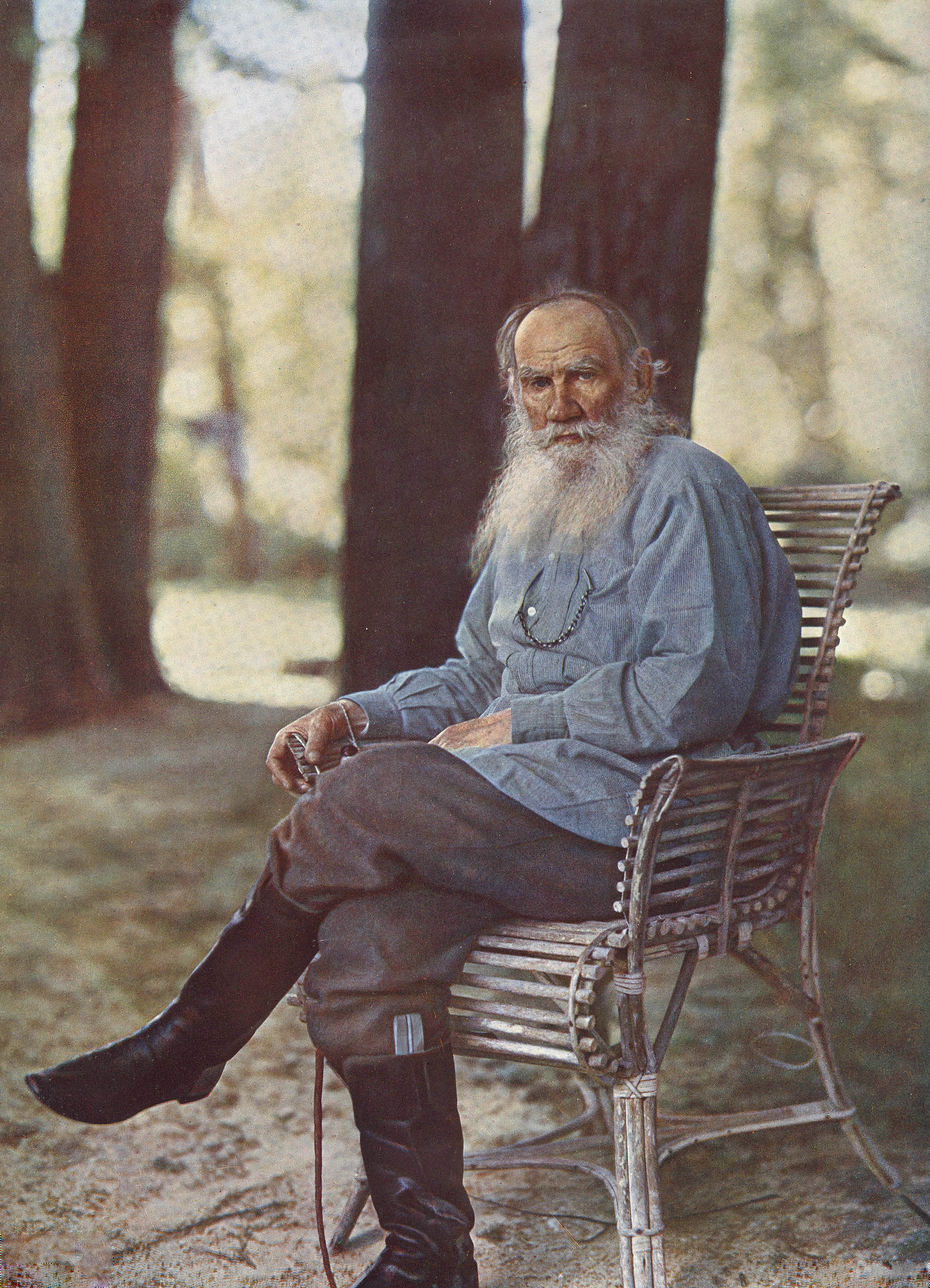
Back to Classics: Lev Tolstoy and Abstinence

The Writer: Lev Tolstoy

Works and Dates: Крейцерова соната (The Kreutzer Sonata) (1889), Дьявол (The Devil) (1889, published posthumously), and Отец Сергий (Father Sergius) (1890-1898)

Why they’re important: As I read these three novellas, I came to think of them as Tolstoy’s “Abstinence Trilogy” – all three display his tortured relationship with women and his past.

Criticism and Commentary: Tolstoy himself wrote an epilogue to The Kreutzer Sonata. Theodore Roosevelt’s comments in a letter to Upton Sinclair about Kreutzer are interesting. I enjoyed D.S. Mirsky’s praise of The Devil in A History of Russian Literature.

IMHO: This trio of abstinence-related novellas about evils of the flesh make for dour summer reading: taking them to the beach could create a distinctly unsatisfying experience if you are surrounded by half-naked bodies. I read the three pieces in the order listed above and found them increasingly enjoyable. The most interesting aspect of reading one after the other was observing the varied methods Tolstoy uses to convey similar themes.

Kreutzer, Tolstoy uses a framing device: one passenger on a train tells another about how and why he killed his wife. In describing this crime of passion, the passenger, Pozdnyshev, speaks of hypocrisy and moral breakdowns, blaming beauty, music, social standards, and the devil more than himself for his woes.

Unfortunately, the novella reads more like a screed against sex and society than as a piece of literature. Pozdnyshev, with his randy past and extreme jealousy, didn’t quite feel real, which isn’t surprising: Tolstoy focuses with Kreutzer on making and repeating a moral point, not on creating settings or characters.

The Devil, by contrast, with its scenes of country life and temptation, feels almost gentle despite its harsh endings. Tolstoy wrote two conclusions for the story, neither of which leaves the reader with much hope. Still, this short novella about a landowner who cannot set aside his passion for a peasant woman despite his love for his wife, reads smoothly and has an almost fabular feel.

Despite the simplicity of the plot itself, The Devil is quite compelling, probably thanks to the sensation that I was watching a train wreck. Irtenev, the main character, seems quite human in trying to sort out the dualism of his relationships, though, like Pozdnyshev, he displayed an irritating and tragic lack of self-control.

Father Sergius is a much more complex piece that depicts a young man who gives up his fiancée and position in society to become a monk. I’ve already read Father Sergius several times and will certainly read it again. I enjoy the contrasts and comparisons that Tolstoy draws between society and the church, and the novella contains a rather gruesomely memorable scene that I will not detail.

What fascinates me most about Father Sergius is that, even as a person lacking religious beliefs, I relate well to Father Sergius’s struggles with his own pride and the church’s efforts to capitalize on his talents for healing. Each time the world invades Father Sergius’s privacy, I want him to be left alone.

Summary: With Father Sergius, Tolstoy creates far more full-blooded characters and situations than he writes in The Kreutzer Sonata or The Devil. All three contain religious motifs and cautionary tales about lust. If you only want to read one, I’d suggest reading The Kreutzer Sonata if you’re in the mood for a diatribe, The Devil if you want a deceptively simple and almost pastoral story of landowners, and Father Sergius if you’ve always wondered what monks think about.

Tuesday, March 11, 2008

Back to Classics: "The Overcoat"

Igor Grabar's cover from the 1890s.
At this superhigh level of art, literature is of course not concerned with pitying the underdog or cursing the upperdog. It appeals to that secret depth of the human soul where the shadows of other worlds pass like the shadows of nameless and soundless ships. – Vladimir Nabokov’s Nikolai Gogol on “The Overcoat”
The Story: Шинель” (“The Overcoat”), about a clerk who needs a new winter coat.

The Writer:
Nikolai Gogol’

Dates: First published in 1842. Gogol’ began writing “The Overcoat” during summer 1839; he finished in spring 1841.

Why it’s important: Dostoevsky acknowledged Gogol’s influence by saying, “We all came out of Gogol’s ‘Overcoat.’” Gogolesque absurdity and a combination of motifs from low and high genres (see below) continue to pop up in Russian fiction. Two post-Soviet examples from my recent reading: Petr Aleshkovskii’s Skunk [sic! He’s Ferret in Russian] and, to a lesser extent, Aleksei Slapovskii’s Phoenix Syndrome.

My favorite criticism: Formalist Boris Eikhenbaum’s Как сделанаШинельГоголя (“How Gogol’s ‘Overcoat’ Is Made”) and the chapter “The Apotheosis of a Mask” from Vladimir Nabokov’s book of notes, Nikolai Gogol. On Gogol in general, Gary Saul Morson's “Absolute Nonsense,” from The New Criterion.

IMHO: So many readers and critics have written so much over the years about “The Overcoat,” often using social, Freudian, and other analytical prisms, that fresh insights are tough to find. Much of the debate concerns themes Nabokov eschews: class differences and big messages. Nabokov believes “The Overcoat” requires creativity from readers and even advises that readers stay away from Gogol’ if they are looking for ideas, facts, or messages.

I (mostly!) agree with Nabokov because “The Overcoat” is so nuanced that it must be felt. As Nabokov notes, the story’s setting is absurd, which he defines not as funny but as pathetic and representative of the human condition in a “nightmarish, irresponsible world.” Nabokov believes Gogol’ wrote best when he avoided treating rational ideas in a logical way. With “The Overcoat,” writes Nabokov, Gogol’ “really let himself go and pottered happily on the brink of his private abyss.”

Grasping Gogol’s ability to retain his balance is, I think, a key to coming to terms with “The Overcoat.” What struck me most in a recent reading of “The Overcoat” is Gogol’s combination of registers and genres, particularly oral storytelling and lives of saints.

Storytelling first: the narrator of “The Overcoat” makes informal asides, clearly delights in verbal play, and repeatedly compromises his reliability. Eikhenbaum’s formalistic analysis of the story refers to what I might call “sound gags,” citing Gogol’s use of names and words that generate puns. The name Akakii Akakevich sounds odd to Russian ears partly because, as my Russian-born literature teacher noted, it sounds like “kaka.”

But Gogol’ is sneaky: “Akakii” can also refer to Saint Acacius. And my Russian dictionary of personal names lists the meaning of the name as (in my translation) “not doing harm, forgiving.” This description fits Akakii Akakevich: he suffers like a saint, fasting to save for his coat, serving with love at work, and asking only that co-workers not offend him. “I am your brother,” the monk-like scribe tells them. Gogol’ uses “brother” in other passages, too. Some readers believe Akakii Akakevich returns from the dead at the end of “The Overcoat,” though, to me, that passage feels more like storytelling than religious mysticism.
Gogol’s blend of oral tradition and religious motifs is artistically risky, but his successful balancing act results in paradoxes that leave this reader feeling unsettled and a bit confused, yet oddly satisfied after repeated readings. The ambiguity fits because it reminds me of двоеверие, the “dual belief” combination of pagan and Orthodox traditions within Russian and Ukrainian culture that Gogol’ includes in many earlier stories.
I’ll leave you with a fitting line from Eikhenbaum’s article on “The Overcoat” that addresses paradoxes and literary devices:
“A grotesque resulted in which the mimicry of laughter alternates with the mimicry of sorrow, and both the one and the other have the appearance of a game, with a controlled alternation of gestures and intonations.”
P.S. This posting is the first of a regular series on Russian classics. Most pieces will coincide with the reading list of the Yahoo Russian Lit Reading Group.

P.P.S. For more on “The Overcoat” and its themes, visit Wuthering Expectations for this piece, which includes some nicely selected brief excerpts that give a good feel for the story. If you’re on a Gogol’ kick, be sure to check the same blog to read about “The Portrait.”

Sunday, December 9, 2007

"Soviet Deadpan" and Absurdity

As a self-taught observer of the absurd – my training comes from trips to the DMV, trying to converse with Russian bureaucrats, and reading about politics – it feels strange to read analysis of Daniil Kharms’s absurdist writing. Deciding what, exactly, made Kharms “weird” or absurdist feels like an inherently absurd act.

That’s not to say that “Soviet Deadpan,” George Sauders’s essay about Daniil Kharms in today’s “New York Times Book Review,” isn’t worth reading. It is! Saunders appreciates the energy and paradox of Kharms’s stories, and touches on the borders between Kharms’s narratives and what he calls “traditional stories.”

Russian literature has a long tradition of absurdity. One classic 19th century example is Nikolai Gogol’s “Нос” (“The Nose”), the tale of a man who wakes up without his nose, only to find the nose on the street, now man-sized, dressed in a nice uniform, and exiting a carriage. Gary Saul Morson’s article “’Absolute nonsense’ – Gogol’s Tales” from The New Criterion provides a wonderfully readable introduction to Gogol’s world.

Mikhail Bulgakov’s Собачье сердце (Heart of a Dog) is another favorite that combines absurdity with fantasy as it shows, among other things, what happens when a man’s organs are transplanted into a stray dog. (For one thing, he becomes head of cat control…)

Sergei Dovlatov takes a very different angle on absurdity in Soviet life and journalism in the book I’m reading now, Компромисс (The Compromise). So far The Compromise is nominally realistic – none of Bulgakov’s talking animals or Gogol’s walking body parts – as it addresses the meaning of truth in the USSR. I’m not worried if using “realistic” to describe absurdity sounds paradoxical: that’s what absurdity is all about.

An earlier Lizok's Bookshelf piece on Kharms: “The Charms of Kharms

Edit, 13 December: For more on Kharms, check out "It's Kharms week, here" on Languor Management, a blog that also includes author Kevin Kinsella's poetry translations.

Mentioned in this posting:
Daniil Kharms book on Amazon
Bulgakov's Heart of a Dog on Amazon
Dovlatov's The Compromise

Saturday, December 8, 2007

Russian Reading Challenge 2008

Are there four Russian novels, plays, story collections, or other books that you've always meant to read but never found time for? I'm sure there are! 2008 is your year.

The Russian Reading Challenge 2008 blog encourages visitors to read four Russian-related books between January 1 and December 31, 2008. The best part about the challenge format is that nobody will be alone -- dozens of participants should mean lots of discussion.

I'm going to use the Challenge as a way to assuage my guilt about missing these classics for too long:

Fyodor Dostoevsky’s Бесы (The Possessed)

Nikolai Gogol’s Ревизор (Inspector General) plus stories I haven’t read in Вечера на хуторе близ Диканьки (Village Evenings near Dikanka -- not the video game!) and Миргород (Mirgorod)

Vasilii Grossman’s Жизнь и судьба (Life and Fate)

Andrei Platonov’s Котлован (Foundation Pit) or, as a backup, Ювенильное море (Juvenile Sea)

For now I'm reading and enjoying Sergei Dovlatov's Компромисс (The Compromise), a very funny-but-sad autobiographical novel about working as a journalist in Soviet Estonia. A friend lent me four volumes of Dovlatov -- t0 be sure I'd find something I liked! -- and I may be reading it all cover-to-cover if everything is this good.

Sunday, November 25, 2007

James Wood & Lev Tolstoy, History & Literature, &tc

It’s a happy day when I can read an analysis-review in The New Yorker by a favorite critic, James Wood, writing about one of my favorite books, Lev Tolstoy’s Война и мир (War and Peace). I’m even happier that Wood succeeded both in illustrating the superiority of a new translation of War and Peace and describing Tolstoy’s techniques in the span of about five pages.

I always enjoy reading Wood’s reviews because he shows a rare talent for illuminating literary texts: he explains literary theory and techniques in ways that make books more intriguing rather than stripping them of their mysteries.

Wood’s piece on War and Peace praises the translation of Larissa Volokhonsky and Richard Pevear because he believes they give “new access to the spirit and order of the book.” Although I can’t quite share his enthusiasm for the use of “juicy” for сочный instead of “sappy” in the passage detailing Prince Andrei’s observations of an oak tree – this juice is sap, so neither word is truly right or wrong – his analysis of Tolstoy’s narration should help readers link the book’s style and substance.

Wood’s commentary on Tolstoy’s paradoxes – Is Tolstoy’s narration intrusive or absent? Are his characters unique or typical? – mentions that Tolstoy, who read European fiction as well as “awkward misfits” of Russian literature, didn’t consider War and Peace a novel. Wood also covers the literary device of defamiliarization, “making it strange” (остранение), and Tolstoy’s views of history, including his belief in “ordinary” people instead of famous figures.

A Couple Thoughts on History and Literature. Writing and reading fiction about historical figures raises questions about plenty of books beyond War and Peace. A friend who's reading Anatolii Rybakov’s Дети Арбата (Children of the Arbat) mentioned that she has trouble with the passages about Stalin. Despite loving most of the book, I did, too, and admit that I skimmed many of the Stalin scenes because I preferred the fictional characters; a Russian friend did the same.

I read fiction because I like to lose myself in stories that combine imaginary people, ideas about real life, and literary devices that help make the stories compelling. Every now and then, though, I find myself caught up in historical novels with figures who once lived. When I began thinking more about what historical characters work for me, I realized that I react best to figures about whom I have the least book knowledge. For example:

-Tolstoy’s generals are fine because of my limited knowledge of the War of 1812.

-I have read so much about Stalin, though, that I much preferred fictional characters in Rybakov’s Children of the Arbat trilogy.

-Vasilii Aksenov’s Московская сага, which begins in English with Generations of Winter, did not impress me when a fictional character gave Stalin an enema. It’s not proctology that was the problem, though: I didn’t like his fictional characters’ interactions with real writers, either. I know too much about Stalin and the writers. Meanwhile, though, I didn’t mind Aksenov’s characterization of Stalin’s son because I knew little about him. In fact, Aksenov piqued my interest enough that I watched a documentary about Vasilii’s exploits as a pilot.

Book Reviews. Today’s New York Times Book Review contains two reviews of nonfiction books about the Soviet Union and Russia:

Young Stalin, by Simon Sebag Montefiore. Review by Richard Lourie.

The Whisperers: Private Life in Stalin’s Russia, by Orlando Figes. Review by Joshua Rubenstein. Although I rarely read nonfiction books, Figes’s inclusion of the stories of Pavlik Morozov, Aleksandr Tvardovsky, and Konstantin Simonov should be more than enough to inspire me to look at the factual side of Russian cultural life for 700 or so pages. Figes’s Natasha’s Dance is a valuable book on Russian cultural history.

Books in this posting:
Pevear-Volokhonsky's "War and Peace" on Amazon
Children of the Arbat on Amazon
Vasilii Aksenov on Amazon
Simon Sebag Montefiore's Stalin Books on Amazon
Orlando Figes Books on Amazon

Tuesday, November 20, 2007

Mikhail Bulgakov and Ivan Vasilyevich


Its no mystery why Leonid Gaidai’s Иван Васильевич меняет профессию (“Ivan Vasilyevich Changes Profession”) became a Soviet box office hit. The movie has everything: antic comedy and gags, songs, a pretender to the throne, Ivan the Terrible, satire on Soviet bureaucracy, a geeky hero named Shurik, a time machine, and more. This YouTube video of one of the first scenes will give you a sense of its now-retro feel.

Several of Gaidai’s movies remain so popular that many Russian can recite famous lines -- I knew a couple from “Ivan Vasilyevich” without realizing where they came from! The screenplay for “Ivan Vasilyevich” is particularly rich with humor because it’s based on Mikhail Bulgakov’s play Ivan Vasilyevich, written in 1935-1936. The movie retains much of the play’s dialogue despite transferring action from the 1930s to the 1970s. I can’t find evidence that the play is available in English, but it shares characters, including Ivan the Terrible, and motifs with a predecessor, Bulgakov’s 1934 Блаженство, available in English as Bliss.

Readers of Bulgakov’s novel Мастер и Маргарита (Master and Margarita) will recognize some familiar elements, albeit on a smaller scale, in “Ivan Vasilyevich.” Although the two works may not seem to have much in common, both involve demons, witches, and unclean spirits, either as characters or superstitions. Both also center around mysterious occurrences and neighbors in Soviet apartment buildings. Though Ivan Vasilyevich, at 40 pages, lacks the richness of M&M, its contrasts – historical and contemporary, reality and fantasy – encourage thought along with the fun.

I loved watching the movie and highly recommend it to students of Russian language, literature, and culture. Even if you don’t enjoy Soviet humor – it’s an acquired taste for many westerners – or catch cultural references, “Ivan Vasilyevich” is worth watching. It’s an important remnant of Soviet popular culture and an example of Mikhail Bulgakov’s wonderful imagination and comedy. Best of all, you can sample clips on YouTube, then add the DVD to your Netflix list! It is now known as "Ivan Vasilievich - Back to the Future" in English.

In this posting:

Mikhail Bulgakov on Amazon
Leonid Gaidai on Amazon (all four are classics)

Friday, November 9, 2007

Reading Russian Classics Needn't Be Painful!

Who would have thought that the novel no high school student has ever finished reading would make such engrossing theater?
-"Dostoevsky's Homicidal Student, the 90-Minute Version," The New York Times, November 9, 2007

Maybe I should demand a correction from Times: I did finish Crime and Punishment in high school. Trust me, I do have a sense of humor, but sometimes it gets tedious to read hyperbolic references to Russian literature in the mainstream press... Nobody has ever finished Crime and Punishment before retirement!... War and Peace, that Everest of novels, has littered the path to enlightenment with oxygen-deprived bodies for over a century!

So what's the problem? Russian lit just needs some better P.R. Yes, many Russian novels are quite long, and many have portentous titles. For me, that's a big part of their appeal. If I like a book, I don't want it to end. And what good is a book if it doesn't consider something serious, whether through comedy or tragedy?

In truth, when you reduce most novels -- from Danielle Steele to Dennis Lehane to Dostoevsky -- down to bare motifs, most turn out to address life, love, and death, with a few subplots thrown in. One Russian theorist, Vladimir Propp, analyzed fairy tales and found only 31 basic plot turns and 8 characters. Take a look, and you'll find that many of Propp's functions apply to literature for adults, too.

Joking that Russian novels are all long and boring might score easy laughs for journalists and readers who haven't touched the books, but there are plenty of relatively simple ways to make even the longest novels more accessible:

Start Short. Sometimes a big masterpiece isn't the best introduction to a writer, particularly if you're not taking a college class. Read something smaller -- a short story or novella -- but well-regarded first to get a feel for the author's views and styles. Then work up to the doorstops. For example:

Pushkin: Try Повести Белкина (The Belkin Tales) before Евгений Онегин (Eugene Onegin). The Belkin stories may be prose to Onegin's poetry, but they're short, very enjoyable, and an important part of Russian literary history.

Dostoevsky: Try the shorter, romantic Белые ночи (White Nights) or spite-laden Записки из подполья (Notes from Undergound) before Crime and Punishment or The Brothers K. These novellas show different sides of Dostoevsky's psychological approach to fiction.

Tolstoy: Novellas like Хаджи Мурат (Khadzhi Murat) and Казаки (The Cossacks) show a lot about Tolstoy's philosophical views, including what happens when cultures come together.

Don't Panic about Russian Names. Some translations of novels include lists of characters, along with nicknames. Make your own if the book doesn't have one. If you want to learn a little more about Russian names, you might want to read this PDF handout that I wrote. You might also like this fairly lengthy list of diminutive forms (nicknames).

See the Mini-Series or Movie. I love to imagine scenes when I read, but sometimes seeing them illuminates meaning: my high school English teacher helped us through Crime and Punishment by showing a PBS mini-series. And even after reading Master and Margarita twice, it took watching the Russian mini-series adaptation for me to truly grasp the horror of what Bulgakov wrote about Satan's ball.

Read the Introduction. Yes, I often skip author bios and introductions, too. But even my small Signet Classic paperback edition of Crime and Punishment from high school includes concise information that illuminates what happens in the book. Background on Dostoevsky mentions his commuted death sentence and philosophy, and the translator's introduction notes the roots of many of the characters' names.

Find It in Translation. Literary translation requires endless decisions, so results vary a lot. Should the translator divide long sentences? Repeat the repetition of the original? Test read the first few pages of different translations to see what fits your taste. If you compare translations of Dostoevsky, you are likely to see that some translators feel compelled to simplify his writing. English and American editions may differ greatly, too.

In the end, any translation is a compromise -- most people would read originals, not translations, if they could -- so find whatever will keep you reading. Don't worry if the translation with the best reviews feels worse to you than an older or cheaper version with no blurbs. Take what you will enjoy: even if that version is a little further from the original than another, you're still much closer to the author's message than if you hadn't read the book at all.

Some recommended Amazon.com listings mentioned in this posting:
Crime and Punishment
The Complete Prose Tales of Alexandr Sergeyevitch Pushkin
The Best Short Stories of Fyodor Dostoevsky (Modern Library)
The Cossacks and Other Stories (Penguin Classics)

Thursday, November 1, 2007

Remembering Stalin's Victims

Earlier this week, Russian human rights organizations led memorial ceremonies to remember people who were imprisoned and killed during the Stalin-era repression. I remember some Russians telling me in the early ‘90s that they had gotten over the trauma of learning about the millions of deaths of the Soviet period. The necessity of reading Solzhenitsyn, one man told me, has passed. I didn’t believe it then and I don’t believe it now.

I've listed below some works of fiction that look at Soviet-era repression from varying perspectives. Rather than writing a lot about them, I’ve linked titles and author names to background information and reviews, many of which make for interesting reading themselves, as reflections of their times and their writers.

Колымские рассказы (Kolyma Tales) by Varlam Shalamov – Sparely written short stories about prison camps. Often included in anthologies.

В круге первом (The First Circle) and Один день Ивана Денисовича (One Day in the Life of Ivan Denisovich) by Aleksandr SolzhenitsynThe First Circle is a long novel that looks at life in a sharashka, basically a scientific lab staffed by prisoners. One Day in the Life of Ivan Denisovich is much shorter and details the difficulties of prison camp.

Дети Арбата (Children of the Arbat), by Anatolii Rybakov, leads off a trilogy that chronicles what happens when a young man is exiled for making “mistakes.” As one Russian reader noted on an Internet forum, the book reads along easily but is difficult to take because Rybakov wrote truthfully, leaving an unpleasant feeling about what happens. The trilogy, particularly the first volume, is well worth the time and the unpleasant feelings.

Софья Петровна (Sofia Petrovna), a short and simply written novel by Lydia Chukovskaya, looks at how disappearances affect the life of one woman.

Also:

Anna Akhmatova’s poetry cycle Реквием (Requiem) is very powerful.

Nonfiction books include Solzhenitsyn’s lengthy Архипелаг ГУЛаг (Gulag Archipelago), Evgeniia Ginzburg’s Крутой маршрут (Journey Into the Whirlwind), and Nadezhda Mandel’shtam’s Hope Against Hope.

Good books about other time periods include Fyodor Dostoevsky’s Записки из мёртвого дома (House of the Dead), which includes some very descriptive and emotional scenes of prison life, and poet Irina Ratushinskaya’s memoir about imprisonment during the Brezhnev era, Серыйцвет надежды (Gray Is the Color of Hope).

Books mentioned in this posting:

Kolyma Tales (Twentieth-Century Classics)
The First Circle (European Classics)
One Day in the Life of Ivan Denisovich: A Novel
Children of the Arbat
Sofia Petrovna (European Classics)
The Gulag Archipelago: 1918-1956
Journey into the Whirlwind (Helen and Kurt Wolff Books)
Hope Against Hope: A Memoir
Memoirs from the House of the Dead (Oxford World's Classics (Oxford University Press).)
Grey Is Color of Hope

Tuesday, October 23, 2007

"A Life in Books" -- Hass Hearts C&P

The best piece of each Newsweek is usually the shortest: "A Life in Books." This week's edition comes from former U.S. poet laureate Robert Hass, who says his fourth most important book is Fyodor Dostoevsky's Crime and Punishment.

Dostoevsky isn't exactly light reading, so it's interesting to see references to Dostoevsky -- and particularly C&P -- in Russian popular culture, including two soap opera-like series that I have watched. Still, this item about a new American musical of C&P really takes the cake.

Mentioned in this posting:

Crime and Punishment

Monday, October 22, 2007

Ivan Bunin: A New Statue in Moscow

A new statue of poet and prose writer Ivan Bunin was installed in Moscow today, opposite the house where Bunin lived before emigrating.

I suspect that Bunin is probably the least-read Russian Nobel Prize winner (1933) among American readers: Boris Pasternak (1958), Mikhail Sholokhov (1965), Alexander Solzhenitsyn (1970), and Joseph Brodsky (1987) all have greater name recognition, for quite varied reasons.

The speech presenting Bunin with his Nobel award recognized his following 19th century classical literary traditions. Bunin’s "Тёмные аллеи" ("Dark Alleys") cycle of short stories is among his best-known work, and his “Sunstroke” is considered an erotic classic. Themes from "Dark Alleys" were adapted for film in 1991, but the movie seems largely forgotten, perhaps because costume dramas based on literature were a bit atypical for the perestroika era.

I’ve always felt guilty for knowing so little about Bunin – particularly because I’ve enjoyed what I read – so maybe this is a sign to take him off the shelf!

Graham Hettlinger’s translations of Bunin have won positive reviews:

Collected Stories of Ivan Bunin The Elagin Affair: And Other Stories Sunstroke: Selected Stories

Tuesday, October 16, 2007

Hello and Welcome!

Disclaimer/Disclosure Update (last updated February 9, 2020): The Russian literature field is small, with fewer than six degrees of separation. As a blogger, freelance writer, and freelance translator, I meet many people – agents, authors, other bloggers, booksellers, journalists, magazines, nonprofit organizations, publicists, publishers, readers, reviewers, translators, writers, etc. – online and in person. I discuss books, publishing, translation, and/or projects with them; those discussions may result in collegial collaborations and/or friendly interactions, as well as paid work related to Russian fiction. (Read Russia, for example, is one of my clients; I write for Read Russia.) This blog can and should be considered related to my paid work and I may consider some of the people I mention to be colleagues and/or friends. Some posts may mention individuals or entities with whom/which I (have) collaborate(d) in some way or discuss books related to them. Though I will always mention review copies received from publishers if I am posting a review-like post and prefer to mention other collaborations, I may not always mention or offer detail about my contact(s) with people/organizations mentioned in my posts: publishing is, after all, a competitive business and confidentiality is important. Two other important things that are probably pretty obvious: 1) Nobody pays me, with money, favors, or anything else, to write blog posts, and 2) My goal as a blogger is to provide honest, critical opinions about the books I read. My honest opinions are the basis of my relationships with all my readers, including publishing houses and agents whose books and writers I read and discuss. I may update this statement at any time, as needed, without notice. (If you’re wondering why I feel compelled to write this disclaimer/disclosure, please read this post on Boston Bibliophile, which contains a FAQ about FTC guidelines that apply to book bloggers.)

P.S. Some of my posts include Amazon.com affiliate links.

-----

I started Lizok’s Bookshelf because people frequently ask me for book suggestions. Those who know me can guess that my easy first choices usually include Russian classics like War and Peace and Doctor Zhivago, two of my favorites.

But what happens after those? Contemporary Russian novels? Or forgotten classics of the 19th and 20th centuries? Maybe genres like Russian detective novels? I began leading literature workshops a few years ago because I hoped I could help Russian books, beyond the blockbusters, reach a few more readers.
Although I read Russian novels in Russian, most of the books I will write about here are available in translation. I hope that this blog will help inspire readers to take up Russian novels, be they classics or contemporary. Another reason I decided to start this blog is that – as I was preparing for an upcoming workshop on post-Soviet era novels – I found very little background information about contemporary Russian writers.
I will only write in-depth about books that I finish, though I may mention others that I didn’t like enough to complete. Just because I don’t like them doesn’t mean that you won’t. I’m a famously impatient reader, so if I don’t like a book but still finish it, something must be interesting!
My goal in writing about books is not to review or analyze them, it is to write about why they appealed to me. I don’t consider myself an expert in Russian literature, just a reader. I finished my MA in Russian literature but dropped out of grad school before receiving a PhD. I couldn’t picture myself as an academic.
I plan to write one or two detailed postings a week and will add links to news items and book reviews, too. I have plenty of ideas for topics but also look forward to your questions. I encourage you to contribute to discussion here, either by adding your own comments about books or asking questions that I or other readers might be able to answer. This is intended as a site for everyone, so I will monitor comments.
Thank you for visiting. I look forward to hearing from you!


Books in this posting:

War and Peace Doctor Zhivago